
The real question isn't whether you can have a dog while working full-time — most people can — it's which breeds genuinely tolerate longer alone periods without distress. Independent, lower-energy breeds and many adult rescue dogs (versus high-drive working breeds or puppies) tend to adapt best to a standard workday. High-drive herding breeds, dogs with separation anxiety predispositions, and very young puppies are the most likely to struggle and develop destructive or anxious behavior when regularly left alone for 8+ hours. Pairing the right breed with a midday walker or daycare plan makes nearly any dog workable.
The best dogs for working people who are away 8+ hours a day. Honest breed-by-breed guide covering separation anxiety, exercise needs, grooming Learn everything about this breed at PetSymptoms.
The question is not really "can I have a dog if I work full time?" Most people can. The question is "which dog won't suffer in my lifestyle?" That distinction matters enormously. Pick the wrong breed and you will come home daily to a distressed, destructive, or anxious animal — often a sign of separation anxiety. Pick the right one, set up a sensible routine, and you will have a genuinely happy companion who is glad to see you when you return, rather than one who has spent the day in a spiral of anxiety.
This guide cuts through the generic listicles and gives you the honest picture: which breeds genuinely cope with a working schedule, what their real challenges are, and what practical steps make any breed more comfortable while you are out of the house.
What Is the Best Dog for Someone Who Works All Day?
The best dogs for working people are breeds that combine low to moderate energy levels, an independent or self-reliant temperament, and a low tendency toward separation anxiety. The most consistently recommended choices are the retired racing Greyhound, the Basset Hound, the Whippet, the Shih Tzu, the Maltese, the Chow Chow, the Lhasa Apso, and the French Bulldog. These breeds were either developed for calm, independent roles or for indoor companion living, which translates well to a household where they are alone for several hours each day.
That said, no dog should routinely be left alone for more than 6 to 8 hours without a midday bathroom break, some enrichment, and social interaction. Most veterinarians recommend adult dogs go no more than 4 to 6 hours between bathroom breaks. A midday dog walker, a trusted neighbor, or part-time daycare is not optional for most working households - it is a genuine welfare requirement.
The honest truth about 8-hour workdays Even the most independent breeds are social animals. No dog thrives being alone all day, five days a week, without any midday contact. Building a midday walk, a dog walker visit, or even a drop-in from a neighbor into your weekly budget is a non-negotiable part of responsible working-dog ownership. Puppies under 6 months need a break every 2 to 3 hours due to small bladders and developmental needs, which makes them a very poor fit for anyone who cannot be home regularly during the day.
Five Traits That Make a Dog Suitable for a Working Lifestyle
Before you look at breed lists, understand what you are actually selecting for. The five traits below are what distinguish a dog that copes well in a working household from one that struggles:
Low to Moderate Energy
Needs one or two moderate walks daily rather than two or more hours of vigorous exercise. Naturally inclined to rest between activity periods.
Independent Temperament
Comfortable in their own company. Affectionate with owners but not excessively clingy or panicked when the house is quiet.
Low Vocalization Tendency
Does not bark or howl persistently when bored or alone. Critical for apartment dwellers and for neighbors who work from home.
Adapts Well to Routine
Settles into a predictable daily pattern without requiring constant unpredictable engagement or stimulation throughout the day.
Low Working Drive
Not bred to herd, track scent, or work continuously. High-drive working dogs channel unused energy into anxiety and destructive behavior.
Quick Comparison: Best Dog Breeds for Full-Time Workers
| Breed | Energy Level | Separation Anxiety Risk | Grooming Demand | Apartment Friendly |
|---|---|---|---|---|
| Greyhound (retired racer) | Low indoors | Low | Minimal | Yes |
| Basset Hound | Low | Low-Moderate | Low | Yes (noise risk) |
| Whippet | Low indoors | Low | Minimal | Yes |
| Shih Tzu | Low | Low | Moderate-High | Yes |
| Maltese | Low-Moderate | Low | Moderate | Yes |
| Lhasa Apso | Low | Low | Moderate-High | Yes |
| Chow Chow | Low-Moderate | Low | High | Possible |
| French Bulldog | Low | Low-Moderate | Low | Yes (health costs) |
| Pug | Low | Low-Moderate | Low | Yes (health costs) |
| Chihuahua | Low-Moderate | Variable | Low-Moderate | Yes |
Best Dog Breeds for Full-Time Workers: Honest Breed Profiles
Each profile below covers not just the positives but the real challenges and costs of ownership, the things most breed guides gloss over.
1. Greyhound (Retired Racer)
The Greyhound is the most consistently recommended breed for working owners by rescue organizations and veterinarians alike, and for good reason. Despite being capable of extraordinary bursts of speed, retired racing Greyhounds spend the vast majority of their day asleep. They are naturally quiet indoors, do not require constant attention, and adapt remarkably well to apartment living and settled routines.
A retired racer typically needs two 20 to 30 minute walks daily and an occasional run in a securely fenced space. Their short coat requires virtually no grooming. Most retired racers come as adult dogs with fully established, known temperaments, which removes the unpredictability of puppyhood.
- Sleeps 16-18 hours a day
- Quiet, non-destructive indoors
- Short coat, minimal grooming
- Gentle, low-maintenance personality
- Adopt as adults with known history
- Needs a securely fenced yard for sprints
- Thin coat means cold sensitivity
- Strong prey drive around small animals
- Needs a soft orthopedic bed (low body fat)
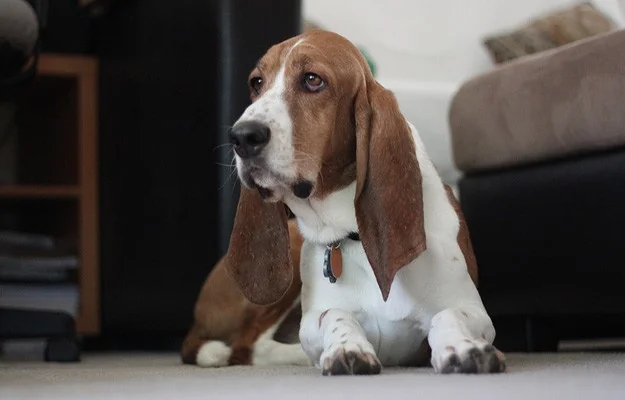
2. Basset Hound
Bred to trail scents at a slow, methodical pace, the Basset Hound is calm, unhurried, and perfectly content to spend the greater part of the day resting. They are tolerant, affectionate, and not prone to destructive behavior when their basic needs are met. They do not demand constant stimulation and tend to roll with changes in routine better than many breeds.
The main challenge for working owners in apartments or terraced housing is the Basset Hound's musical howl. If boredom or anxiety sets in, they will use it, and neighbors will notice. A puzzle feeder, a window perch, or calming background noise can help manage this significantly. Their long ears also need weekly cleaning to prevent recurrent infections.
- Naturally low energy and calm
- Tolerant and even-tempered
- Good with children and other dogs
- Minimal exercise requirements
- Can howl loudly when bored
- Prone to ear infections (needs weekly cleaning)
- Stubborn streak makes training slower
- Weight management is important
3. Whippet
The Whippet shares many of the Greyhound's best qualities in a smaller, slightly more adaptable package. They are gentle, clean, virtually odor-free dogs that sleep heavily during the day and are remarkably quiet indoors. Like the Greyhound, their calm demeanor belies their sprinting capability. They settle easily into apartment routines and are notably sensitive and easy to live with.
Their thin coat and low body fat make them cold-sensitive, so they need a warm sleeping space and a coat for outdoor winter walks. A secure garden or fenced area for occasional runs is important for their wellbeing, though their daily structured exercise needs are moderate.
- Quiet, clean, and low-odor
- Calm and settled indoors
- Minimal grooming requirements
- Very gentle and easy to handle
- Cold sensitive, needs warm bedding and coats
- Requires a securely fenced run space
- Prey drive around small animals
4. Shih Tzu
Developed as a palace companion breed in China, the Shih Tzu was literally designed to be an indoor companion that people came home to rather than worked alongside. They are warm, content, and perfectly happy to spend much of the day napping on a comfortable sofa. Their exercise requirements are genuinely low: two short daily walks and some indoor playtime is adequate for most Shih Tzus.
The notable commitment for Shih Tzu owners is grooming. Their long, flowing double coat mats quickly and requires brushing several times a week minimum. Many working owners opt for a short "puppy clip" trimmed every 6 to 8 weeks by a professional groomer, which dramatically reduces the daily brushing commitment.
- Genuinely low exercise needs
- Warm but not anxiously clingy
- Adapts well to apartment routines
- Generally good with other pets
- High grooming commitment (professional trims needed)
- Brachycephalic breed: heat caution needed
- Can be stubborn during training
5. Maltese
The Maltese is a small companion breed with a surprisingly confident, settled temperament. Many Maltese handle extended alone time well when properly settled into a routine and given adequate enrichment. They are more trainable than many small breeds and less prone to anxiety-driven barking than Chihuahuas or some terrier-type toys when well socialized from puppyhood.
Their white silky coat is beautiful and requires consistent maintenance. A short pet clip reduces the brushing commitment, but regular professional grooming is still needed every 6 to 8 weeks. Like all white-coated breeds, tear staining around the eyes requires regular gentle cleaning.
- Handles alone time well when settled
- Trainable and eager to please
- Compact - suited to any home size
- Gentle and affectionate
- Regular grooming or professional clipping needed
- Tear staining requires daily eye cleaning
- Fragile: not suited to homes with young children
6. Lhasa Apso
The Lhasa Apso is one of the more genuinely independent small breeds. Originally kept as sentinel dogs in Tibetan monasteries, they have a self-possessed, watchful character that does not manifest as clinginess or neediness. They are comfortable in their own company, do not require constant entertainment, and tend to settle quietly in a working household once their routine is established.
They can be reserved with strangers and benefit strongly from early socialization. Their long coat, like the Shih Tzu's, requires major grooming commitment. A professional short clip is the most practical option for busy owners.
- Genuinely independent temperament
- Does not demand constant engagement
- Alert and confident without being anxious
- Stubborn and less eager to please than some breeds
- Can be reserved with strangers
- High grooming needs
7. Chow Chow
The Chow Chow is the most feline-natured dog on this list. They are notably self-contained, do not seek constant human validation, and tolerate alone time better than most breeds. An experienced Chow Chow owner describes them as a dog that is pleased to see you return but has not spent the day pining. For working owners who want a loyal but non-demanding companion, this is a strong match.
The considerable trade-off is that Chow Chows require confident, experienced handling. They are not a first-dog breed. Their thick double coat needs regular brushing, particularly during seasonal shedding. They also have a natural wariness of strangers that makes early, thorough socialization essential.
- Very low separation anxiety risk
- Self-sufficient and calm indoors
- Does not require constant engagement
- Low exercise needs
- Not recommended for first-time dog owners
- Can be aloof and difficult to train
- Dense coat requires meaningful grooming
- Wariness of strangers needs active early socialization
8. French Bulldog
The French Bulldog is calm, adaptable, relatively quiet, and comfortable in apartments, which explains its popularity among urban working professionals. They do not require intense exercise and cope reasonably well with alone time when settled into a consistent routine. Their low-maintenance short coat is a genuine plus for busy owners.
What many breed guides understate is the health cost. French Bulldogs are a brachycephalic breed, meaning their shortened skull structure creates breathing challenges that require lifelong management and can result in costly veterinary interventions. Many French Bulldogs require corrective airway surgery. Pet insurance is strongly recommended. Their skin folds also need regular cleaning to prevent infections.
- Calm, quiet, and minimal exercise needs
- Short coat - easy grooming
- Adapts well to apartment life
- Generally cope with moderate alone time
- Above-average veterinary costs due to breathing issues
- Cannot tolerate heat or vigorous exercise
- Skin fold maintenance required daily
- Pet insurance is near-essential
Breeds to Avoid If You Work Full Time: An Honest Caution
These breeds are not inherently bad dogs. They simply were developed for roles that demand levels of mental and physical engagement a 9-to-5 working schedule cannot provide. Choosing one without exceptional support in place - full-time daycare, a live-in dog sitter, or a working-from-home partner - is genuinely unfair to the animal.
Border Collie
The world's most intelligent working dog needs hours of daily mental and physical work. Without it, they redirect that drive into anxiety, obsessive behaviors, and destruction. A bored Border Collie can undo a kitchen in a morning.
Vizsla
Often called the "Velcro dog" for its intense attachment to owners. Prone to severe separation anxiety. Needs hours of daily exercise and does not tolerate extended isolation without clear behavioral consequences.
Siberian Husky
Bred to run 100 miles a day in a team. Highly vocal, destructive when bored, and completely unsuited to apartment living or a 9-to-5 work schedule without substantial daily exercise.
Jack Russell Terrier
Relentless energy, high intelligence, and a strong prey drive make these dogs demanding beyond what most working owners can meet without marked daily professional support.
Weimaraner
Deeply people-oriented and prone to severe separation anxiety. Needs considerable daily exercise and does not cope well with time alone. Nicknamed the "grey ghost" for the way it follows owners room to room.
Australian Shepherd
A high-drive herding breed that becomes anxious and destructive without a job to do. Not suited to a working household without full-time doggy daycare or a working-from-home household member.
How to Set Up a Working Dog's Day for Success
Breed choice is the foundation, but daily routine makes the real difference. Even the most independent breed benefits from structure and enrichment during a working day. Here is a practical framework that works for most low-energy working dogs:
- Morning walk before you leave. Twenty to thirty minutes of brisk walking gets your dog's energy out and signals that the day is starting normally. A tired dog settles faster. Even on rushed mornings, do not skip this step.
- Enrichment before you close the door. A puzzle feeder with their morning kibble, a stuffed frozen food-dispensing toy, or a long-lasting chew gives your dog something to focus on as you leave, rather than watching the door anxiously.
- Midday contact. Arrange a dog walker, a trusted neighbor, or a drop-in from a family member to take your dog out for 15 to 20 minutes around midday. This is the single most important welfare provision for working dog owners. If budget is a concern, a local dog-walking app or a reliable neighborhood teenager can be a practical option.
- Calm, low-key departures and arrivals. Dramatic goodbyes and over-excited greetings teach your dog that your comings and goings are notable emotional events. Keep departures and arrivals calm. Wait until your dog has settled before giving attention on return.
- Evening exercise and engagement. When you are home, your dog should get your genuine attention: a walk, a training session, or play. This is when the relationship is built. Dogs that get active engagement from their owners in the evenings and mornings tolerate working-day solitude far better than those who are largely ignored even when owners are present.
Consider an Adult Rescue Over a Puppy For most full-time workers, an adult rescue dog from a known-calm breed is a significantly better starting point than a puppy of the same breed. Adult dogs have established temperaments, are almost always already house-trained, and do not require the intensive supervision that puppies need in their first months at home. Reputable breed-specific rescue organizations can match you to a dog based on your specific lifestyle and working hours, which is far more reliable than any breed-list generalization.
Apartment Living and Low-Maintenance Dog Breeds: What Actually Works
Apartment suitability is not purely about size. Several large breeds (Greyhounds and Whippets especially) do better in apartments than many small terrier breeds, because their energy level and noise level are simply lower. When choosing a dog for apartment living as a working professional, prioritize:
- Low to moderate vocalization tendency (the Basset Hound's howl can carry through walls)
- Comfortable with a daily walk rather than requiring garden access throughout the day
- Not a breed with a strong territorial barking response to hallway noises
- Able to settle without needing to run free during the day
The Greyhound, Whippet, Maltese, Shih Tzu, French Bulldog, and Lhasa Apso are all strong apartment options for working owners. The Basset Hound can work in an apartment but requires active management of boredom to prevent howling that disturbs neighbors.
Dogs for First-Time Working Owners: Where to Start
If this is your first dog and you work full time, the combination of breed inexperience and working hours means you need a breed that is not only low-energy and independent, but also relatively forgiving of training inconsistencies and manageable in size. The best choices for first-time working dog owners are the Maltese, Shih Tzu, Whippet, retired Greyhound (as an adult rescue), and Lhasa Apso.
Avoid first-time ownership of Chow Chows (require experienced confident handling), French Bulldogs (complex health costs), and any of the caution breeds listed above. A good puppy class, connection with breed-specific forums or communities, and an honest conversation with a local rescue or reputable breeder about your working hours will serve you better than any breed-list article alone.