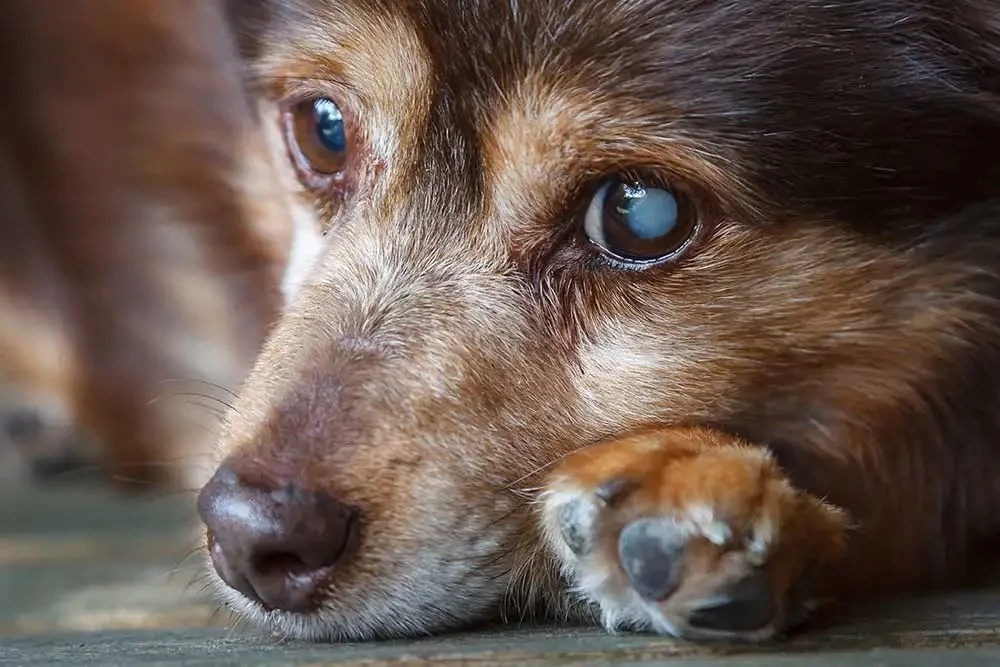

Cataracts cause cloudy, milky, or bluish-grey discoloration in the lens and do not cause pain, but they significantly impair vision and can signal an underlying condition — most importantly diabetes. Up to 80% of diabetic dogs develop cataracts within 16 months of diagnosis, often rapidly, so a sudden cataract in a middle-aged or older dog warrants blood glucose testing, not just an eye exam. Surgery is the only treatment that restores vision and has a high success rate, but many dogs adapt remarkably well to vision loss at home with consistent furniture placement and routine.
Cataracts are a common cause of vision impairment in dogs, occurring when the lens of the eye becomes cloudy or opaque. While they don't cause pain, they significantly affect quality of life and may indicate underlying health conditions. Understanding cataract development, diagnosis, and treatment options — particularly important as part of senior dog care helps owners make informed decisions about their dog's eye health.
Recognizing Cataract Symptoms
Cataracts appear as cloudy, milky, or bluish-gray areas within the pupil (the black part of the eye). In advanced cases, the entire lens may become opaque white. Watch for signs of vision impairment: bumping into furniture, reluctance to manage stairs, hesitation in dim lighting, or changes in behavior. Note that nuclear sclerosis (a normal aging change) also causes cloudiness but doesn't significantly impair vision.
Common Causes and Risk Factors
Diabetes mellitus is a leading cause, with up to 80% of diabetic dogs developing cataracts within 16 months of diagnosis. Hereditary factors affect many breeds including Cocker Spaniels, Poodles, Siberian Huskies, and Boston Terriers. Other causes include trauma, inflammation (uveitis), nutritional deficiencies in puppies, and age related changes. Some cataracts develop rapidly over days, while others progress slowly over years.
Diagnosis Process
Veterinarians perform a thorough eye examination using an ophthalmoscope to assess lens opacity and rule out other conditions. Blood tests check for underlying diabetes or systemic diseases. Referral to a veterinary ophthalmologist provides specialized diagnostics including slit lamp biomicroscopy, tonometry (eye pressure measurement), and electroretinography (retinal function testing) to determine surgical candidacy.
Treatment Options
Surgical removal by a veterinary ophthalmologist is the only treatment that restores vision. The procedure (phacoemulsification) removes the cloudy lens and often implants an artificial intraocular lens. Success rates exceed 90% in suitable candidates. Medical management with antioxidant eye drops may slow progression but won't reverse existing cataracts. Not all dogs qualify for surgery due to age, other health conditions, or retinal damage.
Living with Vision Impairment
Dogs adapt remarkably well to vision loss by relying on their other senses. Maintain consistent furniture placement, use verbal cues, and keep floors clear of obstacles. Approach your dog with gentle voice announcements to avoid startling them. Most dogs with cataracts maintain excellent quality of life with appropriate environmental modifications and owner support.