
The best family dog is not a universal answer — it is the breed that fits your specific household. An active family with a garden has entirely different needs from a flat-dwelling family with a toddler. What all genuinely family-friendly dogs share: predictable temperament from health-tested breeding, tolerance of children's unpredictable behaviour, solid trainability, and a manageable energy level. No breed is inherently dangerous to children, and no breed is automatically safe — early socialisation and consistent training matter far more than breed reputation alone. Also consider time alone — family dogs that bond deeply are among the most prone to separation anxiety when frequently left without company.
Finding the right family dog means matching a breed's natural temperament, energy level, and care requirements to the realities of your household. The ideal family dog is patient, adaptable, genuinely enjoys human company, and is resilient enough to handle the unpredictable enthusiasm of children. This guide covers the breeds that consistently perform well in family settings, with honest assessments of what each actually requires.
What Makes a Good Family Dog?
Beyond reputation, the traits that genuinely matter for family life are:
- Patience and tolerance: A family dog needs to tolerate noise, unpredictable movement, and the occasional accidental rough handling without escalating to aggression.
- Trainability: A dog that learns quickly and reliably responds to basic commands is significantly safer and easier to manage around children.
- Appropriate energy level: Matching energy to your family's activity level matters enormously. A high-drive dog in a low-activity family will find its own entertainment, often destructively.
- Predictability: Consistent, even temperament that does not shift dramatically between moods gives families, especially those with young children, a more manageable companion.
- Size appropriate to home: A giant breed in a small apartment with no garden creates chronic frustration for the dog and management challenges for the family.
Top Family Dog Breeds
Golden Retriever

The quintessential family dog and consistently one of the most popular breeds in the US, UK, and Australia for good reason. Goldens are patient, affectionate, and genuinely enjoy the company of both adults and children. They are highly trainable, rarely aggressive, and adaptable to a wide range of family lifestyles. They need daily vigorous exercise and shed heavily year-round. Health considerations include hip dysplasia and elevated cancer rates, making health testing in parents essential when choosing a breeder.
Quick facts: Gentle giant of family dogs. Patient, trainable, loves children. Needs daily exercise and sheds heavily. Excellent first family dog.
Labrador Retriever

The most registered breed in the US and UK for over 30 consecutive years. Labradors are enthusiastic, playful, and deeply patient with children. They are among the easiest large breeds to train, making them a forgiving choice for first-time dog owners. They require major daily exercise and have above-average food motivation that leads to obesity without careful portion management. Yellow, black, and chocolate coat variations are all identical in temperament.
Quick facts: The world's most popular family dog. Forgiving, adaptable, and deeply loyal. Watch food intake carefully to prevent obesity.
Beagle

A medium-sized, sturdy scent hound that is genuinely curious and sociable. Beagles are solid enough to handle energetic children and small enough for comfortable indoor family life. They are pack-oriented and do well in multi-dog or multi-child households. Challenges include a strong independent streak and a tendency to follow their nose, making secure fencing and reliable recall essential.
Quick facts: Sturdy, sociable, and great with children. Needs a secure garden and patient recall training. Excellent for active families. Before bringing any family dog home, read our puppy care basics guide.
Boxer
Playful, protective, and energetic dogs that form strong bonds with their families. Boxers are excellent with children they know well and have a natural protective instinct. They require experienced handling and daily vigorous exercise. Their short coat is easy to maintain, but they can be stubborn and need consistent training from an early age.
Quick facts: Playful, protective, and energetic. Excellent with children they know well. Requires experienced handling and daily vigorous exercise.
Cavalier King Charles Spaniel

An excellent choice for families who want the gentleness of a Golden Retriever in a smaller package. Cavaliers are calm, affectionate, and thoroughly people-oriented. Their lower exercise needs make them well-suited to families with less active lifestyles or limited outdoor space. Health issues, particularly mitral valve disease and syringomyelia, are considerable in this breed and require health testing in parents.
Quick facts: Gentle, low-energy, and affectionate. Perfect for smaller homes or less active families. Important health screening needed in parents.
Standard Poodle
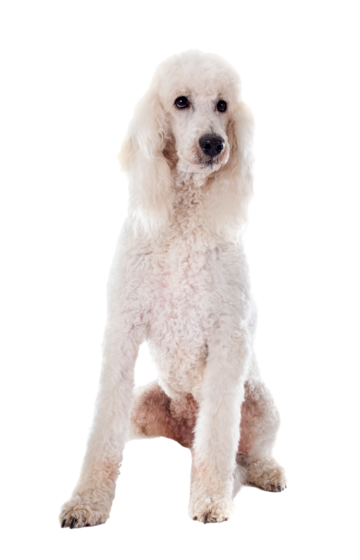
Standard Poodles are among the most intelligent dog breeds and are gentle, patient, and highly trainable. Their low-shedding coat makes them a more suitable choice than most breeds for families with mild allergies. They are larger and more energetic than toy or miniature varieties and need daily exercise. Regular professional grooming is non-negotiable. The combination of intelligence, trainability, and low-shedding coat makes Standards one of the most underrated family dog choices.
Quick facts: Highly intelligent, low-shedding, and gentle. An excellent choice for families with mild dog allergies. Needs regular professional grooming.
How to Choose the Right Breed for Your Specific Family
Beyond breed characteristics, be honest about:
- Exercise capacity: How much time can you realistically dedicate to walks and active play every single day, including in bad weather and busy weeks?
- Children's ages: Toddlers and young children need more tolerant breeds than school-age children who understand dog body language better.
- Space: Garden access matters significantly for large and active breeds. An energetic Labrador in a flat without outdoor space is a welfare concern.
- Allergies: Assess family allergy sensitivities before choosing a heavy shedder. A trial visit to a friend with the breed of interest is informative before commitment.
- Budget: Larger breeds cost more to feed, insure, and treat medically. Some breeds carry above-average health costs due to known genetic conditions.
Tip: Consider a Rescue Dog Many rescue organizations specifically assess dogs for suitability with children and can match you with a dog of known temperament rather than an educated guess based on breed. An adult rescue dog with a family-appropriate temperament assessment is often a safer and more predictable choice than a puppy of the right breed.