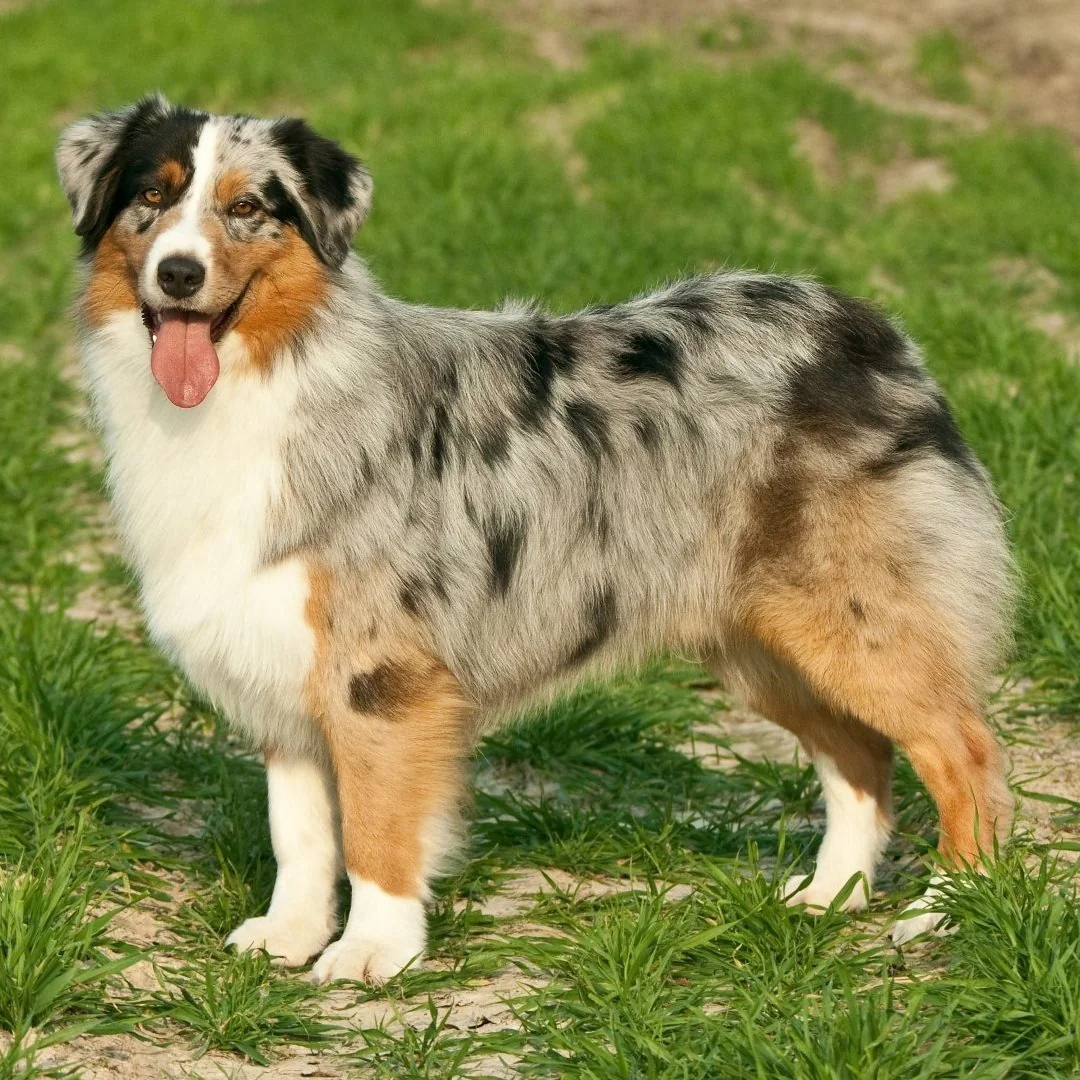

Australian Shepherds are brilliant, athletic, and deeply devoted — but they are emphatically not a casual pet. Bred to work 8–10 hours a day herding livestock, that drive does not switch off at home. Without 1–2 hours of vigorous daily exercise plus structured mental stimulation, Aussies develop obsessive herding, destructive behaviour, and separation anxiety. They also carry the MDR1 gene mutation in significant numbers, making certain common medications genuinely dangerous — always MDR1 test before any medication is prescribed.
- Breed History and Origins
- Australian Shepherd Size
- Colors, Coat Patterns, and Merle Genetics
- Temperament and Personality
- Are Australian Shepherds Good Family Dogs?
- Exercise Needs: How Much Is Enough?
- Training an Australian Shepherd
- Grooming and Shedding
- Health Issues and Genetic Testing
- Nutrition and Feeding Guidelines
- Mini vs Standard Australian Shepherd
- Is an Australian Shepherd Right for You?
- Frequently Asked Questions
Quick Breed Summary
- Highly intelligent, energetic herding dog developed in the American West, not Australia
- Ranked 12th most popular breed in the US by the American Kennel Club
- Requires at least one to two hours of vigorous daily exercise plus consistent mental stimulation
- Four recognized coat colors: black, blue merle, red, and red merle, each genetically distinct
- Carries the MDR1 gene mutation that causes serious drug sensitivities in some individuals
- Double merle breeding significantly increases risk of blindness and deafness in puppies
- Mini Australian Shepherds (Miniature American Shepherds) weigh 20 to 40 pounds vs 40 to 65 pounds for standards
The Australian Shepherd is one of the most intelligent, driven, and visually striking dog breeds in the world. They have earned devoted followings among ranchers, dog sport competitors, search and rescue teams, and active families who can match their extraordinary energy and mental capacity. Despite the name, the breed was perfected in the western United States, not Australia, and remains one of the great working dogs produced on American soil.
This guide covers everything you genuinely need to know before bringing an Aussie home: their real exercise requirements, how merle coat genetics work and why double merles are dangerous, the critical MDR1 drug sensitivity issue many owners overlook, how the mini Australian Shepherd differs from the standard, and what it truly takes to keep one of these dogs happy and healthy for the long term.
Breed History and Origins: Why Are They Called Australian Shepherds?
This is one of the most common questions new Aussie owners ask, and the answer surprises most people. The Australian Shepherd was not developed in Australia. The breed's ancestors were Spanish herding dogs brought to Australia by Basque shepherds emigrating from the Pyrenees region of northern Spain and southern France during the 1800s. When those same Basque shepherds later relocated to the American West with their dogs, American ranchers assumed the dogs had come from Australia because of their shepherds' origins. The nickname stuck permanently.
In California and the broader American West, ranchers and working dog enthusiasts selectively bred these dogs over generations to excel on demanding terrain. They needed animals capable of thinking independently under pressure, working cattle and sheep in extreme heat or cold, reading livestock movement without constant commands, and covering vast ground without tiring. The resulting breed was athletic, quick-witted, intensely loyal, and almost tireless. These traits remain fully intact in modern Australian Shepherds today.
The breed became widely visible in the mid-twentieth century through rodeo performances and western films, which showed their extraordinary agility and obedience. The American Kennel Club formally recognized the Australian Shepherd in 1993. Today the breed ranks among the most popular in the United States and is a dominant force in agility, herding trials, obedience competitions, and service dog work worldwide.
Australian Shepherd Size: How Big Do They Get?
Australian Shepherd Breed at a Glance
| Characteristic | Details |
|---|---|
| Male Height | 20 to 23 inches at the shoulder |
| Female Height | 18 to 21 inches at the shoulder |
| Male Weight | 50 to 65 pounds |
| Female Weight | 40 to 55 pounds |
| Life Expectancy | 12 to 15 years |
| Coat Type | Medium-length, straight to wavy double coat |
| Breed Group | Herding |
| AKC Popularity Rank | 12th most popular breed in the United States |
Australian Shepherds are medium-sized dogs with an athletic, slightly rectangular build designed for power and agility rather than bulk. Males typically stand 20 to 23 inches at the shoulder and weigh 50 to 65 pounds. Females are slightly smaller at 18 to 21 inches and 40 to 55 pounds. Individual variation exists within those ranges depending on genetics and diet.
Puppies reach their full height around 12 to 15 months of age but continue developing muscle mass and filling out until 18 to 24 months. Avoid pushing strenuous high-impact exercise like running on pavement or repeated jumping before growth plates close, as this can contribute to joint problems later in life. During puppyhood, controlled play and training provide sufficient stimulation without stressing developing bones.
Some Aussies are born with naturally short or bobbed tails due to a naturally occurring genetic mutation. In regions where the practice is still permitted, tails are sometimes surgically docked during the first few days of life. Veterinary opinion increasingly discourages routine docking in dogs that will not work in environments where tail injuries are a genuine risk.
Australian Shepherd Colors, Coat Patterns, and Merle Genetics Explained
Australian Shepherd coat colors and patterns are among the most visually spectacular in the dog world. The AKC recognizes four standard base colors: solid black, solid red (also called liver), blue merle, and red merle. Each base color can appear with or without white markings, copper (tan) points, or both. Understanding the genetics behind these patterns is not just interesting, it is essential knowledge for anyone considering breeding.
The Four Standard Australian Shepherd Colors
| Color | Base Coat | Eye Color | Pigmentation |
|---|---|---|---|
| Black | Solid black, may have white or tan markings | Brown, amber (blue in some merle-carriers) | Black nose, lips, eye rims |
| Blue Merle | Black base with random gray/silver patches creating marbled effect | Blue, brown, amber, or any combination including heterochromia | Black nose, lips, eye rims |
| Red (Liver) | Solid copper-to-chocolate coat, may have white or tan markings | Brown, amber | Liver-colored nose, lips, eye rims |
| Red Merle | Red base with random lighter patches creating mottled effect | Blue, brown, amber, or any combination | Liver-colored nose, lips, eye rims |
How the Merle Gene Works and Why Double Merle Breeding Is Dangerous
The merle pattern is created by a single incomplete dominant gene that randomly dilutes pigment across sections of the base coat, producing the distinctive mottled or marbled appearance. One copy of the merle gene creates the beautiful patterns most people associate with the breed. Two copies of the merle gene, which happens when two merle-coated dogs are bred together, creates what is called a double merle.
Critical Breeding Warning: Double Merle Health Risks Double merle puppies (those who inherit the merle gene from both parents) face significantly elevated risks of congenital blindness, deafness, microphthalmia (abnormally small eyes), and other serious neurological and sensory defects. The Royal Kennel Club does not register puppies produced from merle-to-merle matings. Responsible breeders never pair two merle dogs together, regardless of color combination.
Dogs that carry the merle gene but display solid or bicolor coats are called cryptic or phantom merles. These dogs can produce merle offspring without appearing merle themselves, which is why genetic color testing matters before breeding any Australian Shepherd. Heterochromia, meaning two differently colored eyes, is common in merle dogs and carries no health implications on its own.
Non-standard or disqualifying colors include dilute variations, yellow coats, sable, and excessive white markings. These colors may occur naturally due to genetics but fall outside breed standard and are often associated with additional health concerns. Reputable breeders prioritize health over rare coat colors.
Australian Shepherd Temperament and Personality Traits
The official AKC breed standard describes the Australian Shepherd temperament as intelligent, active, and even-dispositioned, good-natured and seldom quarrelsome. That description is accurate but understates just how intensely engaged these dogs are with everything around them. Aussies do not simply live in your home. They observe everything, form their own opinions about what needs to happen, and will find ways to act on those opinions if you do not give them an appropriate outlet.
They are famously described as velcro dogs because they prefer to stay within sight of their primary person at almost all times. This loyalty is one of their most appealing traits, but it also means they can develop separation anxiety if not conditioned to periods of alone time from an early age. Aussies that spend long hours alone without sufficient exercise beforehand frequently redirect their frustration into destructive behavior: chewing, digging, barking, or attempting to escape.
Around strangers, Australian Shepherds tend to be observant and reserved rather than immediately friendly. They assess people before accepting them, which makes them naturally alert watchdogs. With time and positive experiences, most Aussies warm up readily. Prolonged wariness or reactive behavior toward strangers usually indicates insufficient early socialization rather than a temperament fault in the dog.
Their herding instincts remain strong in domestic settings. Many Aussies will attempt to herd children, other pets, or even adults by circling, barking, or delivering gentle nips to heels. These behaviors are entirely natural expressions of their breeding and respond well to training that redirects the drive toward constructive activities.
Are Australian Shepherds Good Family Dogs?
Australian Shepherds can be outstanding family dogs for the right household. The keyword is active. Families who hike, run, train dogs as a hobby, participate in dog sports, or work outdoors are likely to find an Aussie a deeply rewarding companion. Families who want a relaxed dog that settles easily and needs minimal daily engagement are going to find the experience exhausting for everyone involved, including the dog.
Strengths as Family Dogs
- Deeply loyal and emotionally bonded to family members
- Protective and alert without aggression
- Playful and energetic, excellent companions for active children
- Highly trainable, making household manners achievable
- Adaptable to various outdoor activities and dog sports
- Generally good with other dogs when well socialized
Challenges to Consider
- Herding instinct may cause nipping at young children's heels
- High energy can overwhelm toddlers and smaller children
- Requires far more exercise than most families anticipate
- Heavy shedding throughout the year requires consistent grooming
- May develop destructive behavior if under-stimulated
- Not suitable for families who travel frequently without the dog
Children and Australian Shepherds thrive together when kids are old enough to interact respectfully and adults supervise early interactions. Teaching children not to run screaming past the dog (which triggers herding responses) and teaching the dog that nipping is never acceptable makes a considerable difference. Most Aussies with proper training and early exposure become excellent companions for school-age children who enjoy involving the dog in outdoor play.
Australian Shepherd Exercise Needs: How Much Is Enough?
This is the area where prospective owners most commonly underestimate what they are signing up for. Australian Shepherds require at least one to two hours of vigorous physical activity every single day, not as an occasional treat but as a non-negotiable daily minimum. A short walk around the block does not come close to meeting their needs.
Beyond raw exercise time, the type of activity matters. Australian Shepherds need movement that engages their minds simultaneously. A game of fetch that requires them to track distance and anticipate trajectory is more satisfying than running on a treadmill. Training sessions that teach new behaviors during exercise are especially effective. Activities that mirror their herding heritage, such as agility courses, herding trials, flyball, or scent work, tap directly into their instincts and leave them genuinely satisfied.
Exercise Ideas for Australian Shepherds Agility training, herding trials and instinct tests, advanced obedience training, off-leash hiking on trails, frisbee and disc dog competitions, dock diving, flyball, nose work and scent detection, long-distance trail running (in adult dogs), swimming, and structured fetch games with directional cues all make excellent outlets. Rotating activities prevents boredom.
Australian Shepherds that do not receive adequate exercise are not simply restless. They are actively working dogs with nowhere to direct their energy. The result is typically a dog that barks constantly, shreds furniture, digs under fences, or develops anxiety-driven behaviors that become harder to manage over time. Exercise is not optional for this breed. It is the foundation of all other good behavior.
Apartment living is technically possible for Australian Shepherds, but it requires an exceptionally committed owner who is prepared to provide multiple long exercise sessions and structured training daily. Homes with securely fenced yards are meaningfully better suited to the breed's needs. Access to dog sports facilities, hiking trails, or open training fields dramatically improves quality of life for Aussies in any setting.
Training an Australian Shepherd: What Actually Works
Australian Shepherds are among the most rewarding dogs to train because they genuinely enjoy the process. Learning new things, solving problems, and working cooperatively with a skilled handler are deeply satisfying activities for this breed. The challenge is not that they cannot learn quickly. It is that their intelligence means they will figure out inconsistencies in your training faster than you notice them, and they will exploit those inconsistencies without guilt.
Positive reinforcement is the most effective approach. Reward-based training using treats, praise, play, or toys as motivation produces faster learning and a more enthusiastic working dog than any method involving intimidation or harsh corrections. Australian Shepherds are sensitive to tone of voice and read body language acutely. A calm, clear, consistent handler gets far better results than an emotional or unpredictable one.
Start training immediately when you bring a puppy home. Even eight-week-old Australian Shepherd puppies are ready to learn sit, name recognition, and basic leash manners. Early puppy socialization classes provide both structured training and controlled exposure to other dogs and people. The socialization window, roughly eight to sixteen weeks of age, is critically important for building the confident, adaptable adult temperament Aussies are capable of.
Because Australian Shepherds learn quickly, repetition of mastered skills bores them. Once your dog reliably performs a command in a quiet setting, add distractions, distance, duration, and novelty. Progress to more advanced obedience, introduce trick training, try a dog sport class, or enroll in herding instinct testing. Keeping training mentally challenging is not just fun for the dog. It directly prevents the boredom-driven behaviors that drive Aussie owners to frustration.
Herding behaviors like circling, nipping, staring, and barking should be addressed early with consistent redirection rather than punishment. Teach an incompatible behavior, such as sitting for a treat, whenever the herding impulse surfaces. Many Australian Shepherds benefit from actual herding lessons where they can exercise the instinct safely and appropriately under professional guidance.
Australian Shepherd Grooming and Shedding: What Owners Really Need to Know
Australian Shepherds are moderate to heavy shedders. Their medium-length double coat sheds throughout the year and undergoes two heavier seasonal shed cycles, typically in spring and autumn, when they blow their undercoat to adjust to temperature changes. During those periods, daily brushing is often needed to stay ahead of the loose fur. Outside shedding season, two to three brushing sessions per week keeps most coats manageable.
Australian Shepherd Grooming Routine
Use a slicker brush for surface coat maintenance and an undercoat rake or deshedding tool to remove dead fur from beneath the outer layer. Working through the coat methodically, section by section, prevents mats from forming in the areas where they are most common: behind the ears, in the armpits, around the collar, and along the rear feathering. Matted fur is uncomfortable for the dog and can harbor skin irritation or parasites if unaddressed.
Bathe your Australian Shepherd every six to eight weeks under normal circumstances, or when they have rolled in something memorable. Use a shampoo formulated for dogs with double coats to preserve the natural oils that keep the coat weather-resistant. Thoroughly blow-drying the coat after bathing prevents the dense undercoat from staying damp, which can cause skin problems over time.
Additional routine maintenance includes trimming nails every three to four weeks, checking and cleaning ears weekly for redness, odor, or discharge, and brushing teeth several times per week. Australian Shepherds with heavy feathering on their legs and chest may benefit from occasional trimming to keep the coat from collecting debris on outdoor adventures. Professional grooming services every six to eight weeks can supplement home care, especially during heavy shedding seasons.
Shedding Management Tips A high-velocity dryer used after bathing removes far more loose undercoat than brushing alone. Regular grooming not only reduces hair around your home but also makes bonding time, lets you check for lumps, cuts, parasites, and skin changes, and keeps your dog comfortable during warm months. Investing in a quality undercoat rake makes the process significantly faster.
Australian Shepherd Health Issues and Genetic Testing
Australian Shepherds are generally healthy and hardy dogs, but the breed carries specific genetic predispositions that every owner and prospective buyer should understand. Knowing which conditions to test for, what symptoms to watch for, and what responsible breeders screen before breeding dramatically reduces the likelihood of heartbreaking and expensive health problems.
MDR1 Gene Mutation (Multi-Drug Resistance Gene)
This is arguably the most important health issue for Australian Shepherd owners to know about. The MDR1 mutation, also called the ABCB1 mutation, causes affected dogs to be unable to properly pump certain drugs out of the brain, leading to toxic buildup. Drugs that can be dangerous for affected dogs include certain dewormers (ivermectin, milbemycin, moxidectin), some anticancer drugs, some anti-diarrheal medications, and certain sedatives. A simple genetic test identifies whether your dog carries zero, one, or two copies of the mutation. Always inform your veterinarian of your Australian Shepherd's MDR1 status before any procedure or prescription.
Hip and Elbow Dysplasia
Malformation of the hip or elbow joint that causes abnormal wear and can progress to painful arthritis. Reputable breeders screen breeding stock through OFA (Orthopedic Foundation for Animals) evaluations or PennHIP radiographs. Maintaining a healthy body weight and providing appropriate exercise throughout the dog's life significantly impacts long-term joint health.
Collie Eye Anomaly (CEA) and Progressive Retinal Atrophy (PRA)
CEA is a congenital condition causing abnormal development of the choroid, retina, and sclera that can range from mild with no functional impact to severe with retinal detachment and blindness. PRA involves the progressive degeneration of retinal cells, leading to gradual vision loss. Both conditions are detectable through DNA testing and annual eye examinations by a board-certified veterinary ophthalmologist. Responsible breeders test for both before breeding.
Epilepsy
Seizure disorders occur in the breed and are often heritable. Epilepsy in Australian Shepherds can frequently be managed effectively with anticonvulsant medications such as phenobarbital under veterinary supervision. A stable routine, consistent medication schedule, and minimizing known stress triggers support quality of life in affected dogs.
Deafness
Congenital deafness in Australian Shepherds is most strongly associated with double merle genetics, where the absence of pigment-producing cells in the inner ear causes permanent hearing loss. Single merle dogs face a much lower risk. Hearing can be assessed through a BAER (Brainstem Auditory Evoked Response) test, especially recommended for predominantly white or double-merle dogs.
Autoimmune Thyroiditis
An immune-mediated condition in which the body attacks thyroid tissue, reducing hormone production. Symptoms include weight gain, reduced energy, hair thinning, and intolerance to cold. The condition is manageable with daily thyroid hormone supplementation once diagnosed. Annual thyroid panels as part of routine wellness bloodwork allow early detection.
When evaluating breeders, request documentation of health clearances for hip and elbow dysplasia (OFA or PennHIP ratings), eye examinations (annual CAER exam results), MDR1 genetic testing, and CEA/PRA DNA test results for both parents. A responsible breeder will provide these records proactively. A breeder who cannot or will not provide health clearances is a meaningful red flag regardless of how beautiful the puppies look.
Australian Shepherd Nutrition and Feeding Guidelines
Australian Shepherds are active dogs with appropriately higher caloric needs than sedentary breeds of similar size. Choose a high-quality complete and balanced commercial diet formulated for active, medium-sized adult dogs. During puppyhood, a large-breed puppy formula supports controlled growth that protects developing joints. Avoid foods that promote rapid weight gain in puppies, as this adds unnecessary stress to forming growth plates.
Most adult Australian Shepherds do well on two measured meals daily rather than free feeding, which makes monitoring intake and body condition straightforward. Adjust portion sizes based on your individual dog's activity level, age, and the caloric density of the specific food you are feeding. An Aussie that runs agility four times per week has very different caloric needs than one who primarily takes leash walks.
Monitor body condition regularly by feeling along the ribcage. You should be able to feel the ribs without pressing hard but should not be able to see them prominently. Australian Shepherds that gain excess weight face increased joint strain, which matters especially in a breed with genetic predisposition to dysplasia. Limit high-calorie treats and avoid table scraps.
For dogs confirmed to carry the MDR1 mutation, discuss all dietary supplements and medications with your veterinarian before introducing them, as some formulations contain compounds that interact with the mutation. Dogs with confirmed hip or elbow issues may benefit from diets containing glucosamine and omega-3 fatty acids, though veterinary guidance on appropriate supplementation is recommended.
Mini Australian Shepherd vs. Standard Australian Shepherd
People searching for mini Australian Shepherd frequently encounter confusion because the term is informal. The official AKC-recognized breed for what most people call a mini Aussie is the Miniature American Shepherd. This breed was developed by selectively breeding down smaller Australian Shepherds over several generations. Despite the different official name, Miniature American Shepherds are virtually identical to standard Australian Shepherds in temperament, coat colors, herding instinct, intelligence, and health considerations. The primary difference is size.
| Characteristic | Standard Australian Shepherd | Mini Australian Shepherd (Miniature American Shepherd) |
|---|---|---|
| Height | 18 to 23 inches | 13 to 18 inches |
| Weight | 40 to 65 pounds | 20 to 40 pounds |
| AKC Recognition | Australian Shepherd (1993) | Miniature American Shepherd (2015) |
| Coat Colors | Black, blue merle, red, red merle | Black, blue merle, red, red merle (identical) |
| Temperament | Intelligent, high-energy, herding instinct | Nearly identical to standard |
| Daily Exercise Needs | 1 to 2+ hours vigorous activity | 45 to 90 minutes vigorous activity |
| Apartment Suitability | Challenging, requires extreme commitment | Slightly more manageable with dedicated exercise |
| Key Health Concerns | MDR1, hip/elbow dysplasia, CEA, PRA, epilepsy | Same conditions, plus potential small breed joint considerations |
One common misconception is that the mini Australian Shepherd is a calmer or lower-maintenance version of the standard. This is not accurate. Mini Aussies carry every ounce of their larger counterpart's intelligence, herding drive, and need for mental engagement. A family that cannot meet a standard Aussie's exercise needs would face the same challenges with a mini. The size advantage matters most in terms of physical space and food cost, not exercise demands or mental stimulation requirements.
There is also a toy Australian Shepherd category sometimes advertised by breeders, referring to dogs standing under 14 inches and weighing under 12 to 17 pounds. These very small dogs are not a separately recognized breed, and extremely small size in what is naturally a medium-energy working dog can come with its own structural and health concerns. Research any breeder advertising unusually small Aussies carefully.
Is an Australian Shepherd the Right Dog for Your Lifestyle?
Right for You If You...
- Are physically active and enjoy outdoor activities daily
- Have genuine interest in dog training as an ongoing hobby
- Want to participate in dog sports like agility, herding, or obedience
- Have experience with intelligent, high-drive breeds
- Can commit to regular brushing and seasonal shedding management
- Have a securely fenced yard or reliable daily access to open spaces
- Work from home, have a flexible schedule, or have family members present most of the day
Not Right for You If You...
- Want a low-energy or low-maintenance companion dog
- Cannot commit to at least one hour of vigorous daily exercise
- Are away from home for long stretches most days
- Have very young toddlers who cannot yet engage safely with an energetic herder
- Prefer a dog that settles quietly without continuous mental challenges
- Are not prepared to vacuum frequently or groom regularly
- Are new to dog ownership with no experience with working breeds
Australian Shepherds in the wrong environment are not simply inconvenient. They are genuinely unhappy, and unhappy Aussies create genuinely difficult situations for everyone in the household. The breed's intelligence and drive, which make them so extraordinary in the right hands, become the source of behavioral problems when their needs are not met. This is why Australian Shepherds appear frequently in rescue organizations despite being one of America's most popular breeds. New owners underestimate what they require, and the dogs pay the price.
If you are drawn to the Aussie's appearance and intelligence but honestly cannot provide two hours of vigorous daily activity, consider the Miniature American Shepherd with a slightly reduced exercise demand, or consult with a working breed rescue about adopting a calmer adult dog whose true energy level and temperament are already known. Getting the right dog for your actual lifestyle is the single best thing you can do for both yourself and the animal.