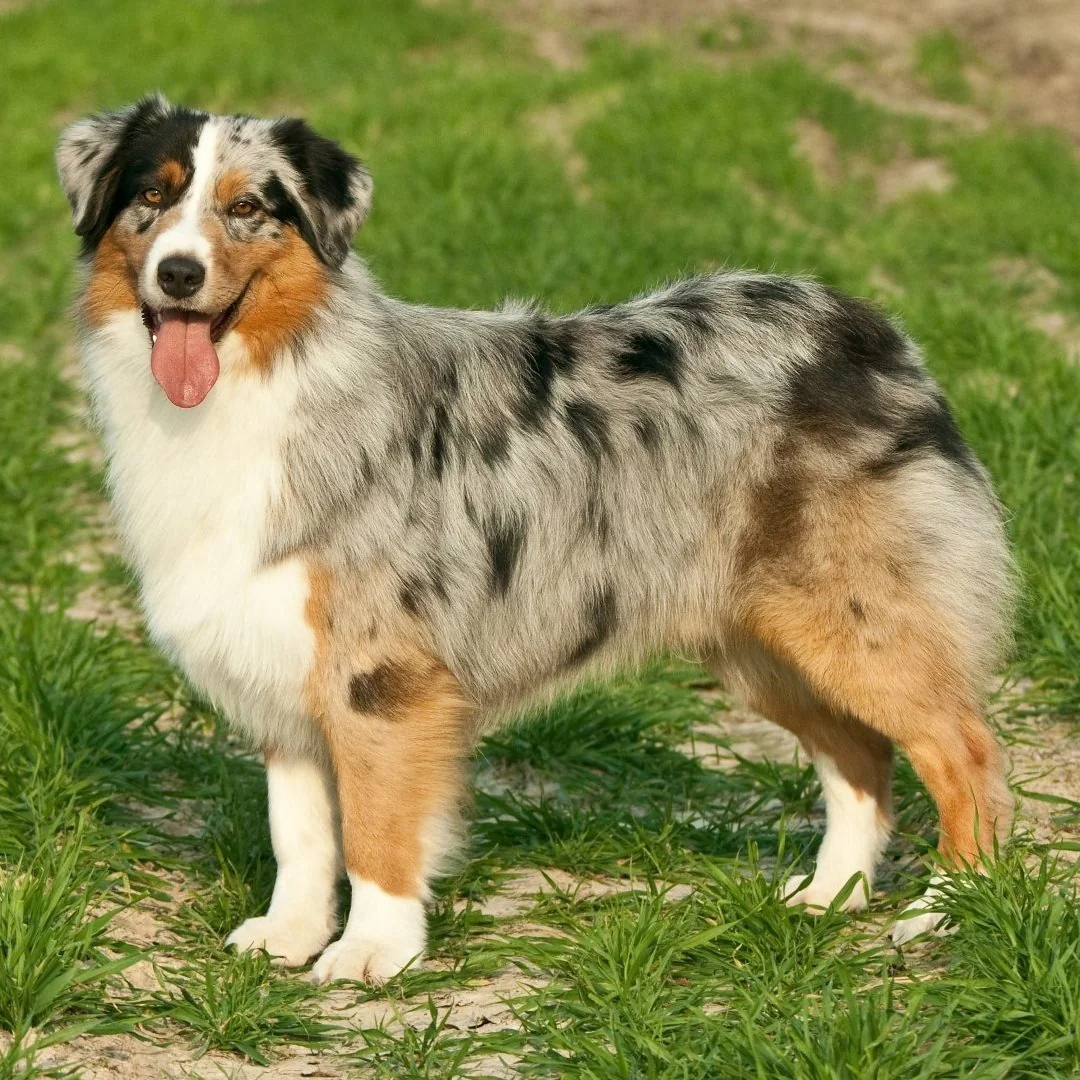

The herding drive is not a training issue — it is a biological imperative bred in over centuries of selective pressure. Herding dogs nip, chase, stare down, bark, and circle because that is what they were made to do. In a home without livestock, that instinct redirects toward children, cats, cyclists, and anything else that moves. The question is not "will they herd" but "what will they herd." This is entirely manageable through consistent training, vigorous exercise, and mental stimulation — but the drive never fully disappears, and owners who expect otherwise tend to be profoundly frustrated.
What All Herding Dogs Have in Common
- Bred to gather, move, and control livestock through instinct, intelligence, and physical stamina over long working days
- Among the most trainable and intelligent dogs in the canine world, with high responsiveness to positive reinforcement
- Hardwired herding instinct does not disappear in household pets. It is redirected toward children, other pets, cyclists, and moving objects
- High exercise needs across all herding breeds, typically 1 to 2 hours of vigorous daily activity minimum
- Mental stimulation is as critical as physical exercise. An intellectually idle herding dog is a problem dog
- The AKC Herding Group was created in 1983 and includes over 30 recognised breeds
In This Guide
Herding dogs are not one thing. They range from the compact, low-slung Pembroke Welsh Corgi who drove cattle by nipping their heels, to the flowing-coated Rough Collie made famous by Lassie, to the intense, crouching Border Collie who can move a flock of sheep across a hillside with nothing but its gaze. What they share is a common purpose: they were bred, selected, and refined over generations specifically to work alongside humans managing livestock. That shared purpose created a remarkably consistent set of characteristics that shows up across breeds despite enormous differences in size, coat, and appearance.
Understanding what herding dogs are built for makes everything about their behaviour, their needs, their quirks, and their strengths make complete sense. And it is the most reliable starting point for deciding whether one of these extraordinary breeds is right for your life.
What Makes a Dog a Herding Dog
The AKC Herding Group, established in 1983 when these breeds were separated from the Working Group, includes over 30 recognised breeds. The group encompasses extraordinary variety: some herding dogs work by gathering sheep toward the shepherd (gathering or fetching breeds), others work by pushing livestock away from the shepherd (driving breeds), and some, like the Belgian Malinois and the German Shepherd, have expanded into protection, police, and military roles while retaining their herding heritage.
What all herding breeds share is that their herding behaviour is a refined, controlled form of predatory behaviour. Through centuries of selective breeding, the full predatory sequence in dogs, which is eye, stalk, chase, grab, kill, was modified. The kill portion was essentially eliminated, and the eye, stalk, and chase portions were amplified and made controllable through human training and communication. The result is a dog with extraordinary focus, controlled intensity, and the athletic ability to execute complex movement patterns over hours of sustained work.
Traits All Herding Breeds Share
Exceptional Intelligence
Herding dogs are consistently ranked among the most intelligent dog breeds. Border Collies, Australian Shepherds, and German Shepherds regularly top trainability rankings.
Strong Visual Awareness
Sharp eyesight and constant environmental scanning are bred-in traits. These dogs notice movement at distances other breeds would miss entirely.
High Energy and Stamina
Built for hours of sustained activity across varied terrain. This energy does not reduce significantly in household environments without adequate exercise.
Strong Human Bond
Bred to work as a team with a handler over long distances, herding dogs are deeply attentive to their owners and highly responsive to subtle signals.
Intense Focus
The ability to concentrate on a task for extended periods without distraction is a core working trait. This focus is equally apparent during training and play.
Athletic Build
Lean, muscular builds optimised for agility and speed rather than bulk. Most herding breeds are medium-sized with excellent proportional strength.
Top Herding Breeds Profiled
Border Collie Most Intense
The most intelligent dog breed in the world by most assessments, and the most demanding. Border Collies use the "strong eye," an intense, crouching gaze, to control sheep. In the home, this same focused intensity is directed at balls, children, and anything else that moves. They need at least 1 to 2 hours of vigorous exercise daily plus substantial mental stimulation and are not recommended for inexperienced owners or sedentary households. When their needs are met, they are extraordinary companions and are unmatched in dog sports. See our full Border Collie breed guide for a complete overview.
Australian Shepherd Versatile Working Dog
Despite the name, Australian Shepherds were developed in the American West to herd cattle and sheep. They combine high working drive with a slightly softer temperament than Border Collies, making them somewhat more manageable for experienced owners who do not have a livestock background. Aussies excel at agility, flyball, and obedience and tend to be deeply loyal family dogs. They come in striking merle, tricolour, and black-and-white coats. The Miniature American Shepherd is closely related and carries similar traits in a more compact size.
German Shepherd Most Versatile
Originally a herding breed, the German Shepherd has expanded into police work, search and rescue, military service, and guide dog roles while remaining one of the most popular family dogs in the world. They are confident, courageous, and deeply loyal to their family. Their working drive is high and they require consistent training, regular vigorous exercise, and ongoing mental stimulation. German Shepherds can be reserved with strangers and benefit greatly from thorough early socialisation. Hip and elbow dysplasia are meaningful health concerns in the breed.
Pembroke Welsh Corgi Compact and Spirited
The Pembroke Welsh Corgi is a surprisingly effective herding dog despite being one of the smallest breeds in the group. Corgis drove cattle by nipping at their heels and were too low to receive a kick that would injure a larger dog. In the home, this heel-nipping instinct can be directed at running children. Corgis are outgoing, affectionate, and very food motivated, which makes training rewarding. They are somewhat more manageable than the high-drive herding breeds and suit active owners who want a smaller, trainable dog without the extreme intensity of a Border Collie.
Shetland Sheepdog (Sheltie) Gentle and Trainable
The Shetland Sheepdog is essentially a miniature rough-coated Collie with a gentle, sensitive temperament that makes it one of the more accessible herding breeds for families. Shelties are brilliant at obedience and agility, deeply loyal to their family, and often reserved with strangers. They are vocal, which can be a concern in apartments or close-neighbour situations. Their long, flowing double coat requires regular brushing. Shelties respond poorly to harsh training and thrive with consistent, positive, calm handling.
Belgian Malinois Extreme Drive
The Belgian Malinois has become increasingly popular as a family dog, largely driven by their prominence in military and police work. This popularity has caused clear welfare problems because very few households can genuinely meet a Malinois's needs. They require several hours of intense physical and mental work every day, are deeply sensitive, and can develop anxiety and aggression when under-exercised or poorly managed. The Malinois is not a breed for first-time owners, apartment dwellers, or households where the dog would be alone for marked periods. In the right hands with the right lifestyle, they are extraordinary.
Cardigan Welsh Corgi Ancient and Hardy
One of the oldest herding breeds in Britain, the Cardigan is distinguished from the Pembroke by its long tail and slightly larger, more reliable frame. Cardigans are slightly less excitable than Pembrokes and tend to be calmer and more easygoing as household companions. They are intelligent, adaptable, and enjoy training. Like all Corgis they can have a tendency to bark and to herd children. A moderate exercise requirement and manageable grooming needs make them a realistic option for owners who want an active but not overwhelming herding breed.
Australian Cattle Dog (Blue Heeler) Rugged and Driven
The Australian Cattle Dog was bred to drive cattle across the vast, rough terrain of the Australian outback, which tells you a great deal about its toughness and stamina. They are intensely loyal to their primary person, often described as one-person dogs. Australian Cattle Dogs are known for high energy, intelligence, and a strong bite inhibition historically required for nipping cattle. They need experienced handling, notable daily exercise, and consistent early socialisation. Their striking blue or red speckled coats are distinctive, and they tend to be hardy with few major breed-specific health problems.
The Herding Instinct in Family Life
The herding instinct does not turn off when a dog moves into a house. It is an ingrained, genetically wired set of behaviours that will look for an outlet regardless of whether livestock are present. In a family setting, this typically means the dog attempts to gather and control the movement of people, children, other pets, cyclists, and joggers encountered on walks.
The classic expression is heeling nipping: nipping at the heels of running children the same way a Corgi would nip at the heels of a cow to drive it in the right direction. This is not aggression. The dog is doing exactly what its genetics are asking of it. But it is a problem in a household with young children, and it needs to be addressed through training and management rather than punishment.
Managing the Herding Instinct Around Children Redirect herding behaviour to appropriate outlets. A dog that needs to chase and control things should have structured games of fetch, disc, or agility that provide the chase satisfaction within a controlled framework. Teach an incompatible behaviour such as "sit" or "go to your mat" for when visitors arrive or children begin to run. Never punish the instinct itself, only redirect it.
Many herding dogs also show staring behaviour with other animals and strangers, which can be misread as aggression. The "eye" of a Border Collie or the intense gaze of an Australian Shepherd is typically a precursor to herding behaviour, not to attack. Understanding the difference is important for both management and for assessing true aggression should it develop.
Exercise and Mental Stimulation
All herding breeds need considerable daily exercise, but the quantity and type varies considerably across the group. Border Collies and Belgian Malinois are at the extreme end, needing multiple hours of vigorous activity daily. Corgis and Shelties need considerably less physical output, but still well above what many companion breeds require.
What unites every herding breed, regardless of size, is the need for mental stimulation alongside physical exercise. A Border Collie that runs for two hours but has no mental challenge is not a satisfied Border Collie. The same applies to a Sheltie or a Corgi. The working brain of a herding dog needs to engage with problems, learn new things, and solve challenges regularly. Training sessions, food puzzles, scent work, agility, and structured games all meet this need.
The Best Activities for Herding Dogs Agility training combines physical exercise, problem-solving, and teamwork in one activity and suits most herding breeds brilliantly. Flyball, disc dog, and scent work are also excellent. For those with access to livestock, herding clinics and instinct testing give the dog the opportunity to engage the original purpose it was bred for, and most herding breed owners who have done this report remarkable changes in their dog's overall contentment and focus.
Training Herding Dogs
Herding dogs are among the easiest dogs to train because they are so motivated to engage with their owners and so quick to learn. They are also among the easiest dogs to accidentally train badly for precisely the same reasons. A herding dog will learn every unintended lesson as readily as every intended one.
Positive reinforcement is the most effective training approach across all herding breeds. These dogs are sensitive to their owners' emotional states, and harsh methods, raised voices, or unpredictable corrections cause lasting anxiety that interferes with both learning and the owner-dog relationship. Consistent, clear, reward-based training sessions of 5 to 15 minutes, several times a day, produce excellent results.
Early socialisation is particularly important. Many herding breeds can develop wariness, reactivity, or fear-based behaviour toward strangers or novel environments if their critical socialisation window between 8 and 16 weeks is not used effectively. Puppy classes, regular positive outings, and exposure to different people, sounds, and surfaces during this period creates a far more stable, adaptable adult dog.
⚠ Health Note for Herding Breed Owners: Several herding breeds — including Border Collies, Australian Shepherds, and Miniature American Shepherds — carry the MDR1 gene mutation, which makes certain common medications potentially fatal. Always DNA test before any medication is prescribed.
Is a Herding Breed Right for You?
A herding dog suits you well if you are genuinely active, spend meaningful time at home, have experience with dogs, enjoy training and working with a dog rather than just walking it, and have secure outdoor space for exercise. The reward for meeting these requirements is one of the most responsive, loyal, and impressive companions in the entire dog world.
A herding breed is probably not the right choice if you are looking for a low-maintenance companion, you are away from home for 8 or more hours daily, you have very young children and no experience managing herding behaviours, or you live in a small apartment with limited outdoor access.
If you love the idea of a herding breed but want a slightly less intense entry point, the Shetland Sheepdog, the Pembroke Welsh Corgi, and the Cardigan Welsh Corgi offer many of the same qualities at a somewhat lower working drive level. They still require commitment, but the margin for error is slightly wider than with Border Collies or Belgian Malinois.