Designer breeds offer real benefits: lower-shedding coats, hybrid temperaments, and sizes that suit apartment living. But "designer" is a marketing category, not a breed standard — coat type, shedding level, size, and temperament are far less predictable in first-generation crosses than advertising implies. No dog is truly hypoallergenic: all dogs produce allergens in saliva, dander, and urine. The designer dog market also attracts serious puppy mills — the puppies with the most elaborate websites and lowest prices are often the least ethically bred. Research the breeder as thoroughly as you research the breed.
Key Points Before You Read On
- Designer dogs are deliberately bred crosses between two recognised purebreds, not random mixed breed dogs
- Hybrid vigour is real but partial. Crossbred dogs are not automatically healthier than purebreds, and can inherit health conditions from both parent breeds
- Coat type, shedding level, size, and temperament are significantly less predictable in first-generation crosses than in established purebred lines
- No dog is truly hypoallergenic. Poodle crosses tend to shed less, but allergy response varies per individual and per dog. See our pet allergy management guide for household strategies.
- The designer dog market attracts both excellent responsible breeders and serious puppy mills. Knowing the difference is essential
- Most designer breeds are not recognised by the AKC but many have their own dedicated breed clubs and registries
In This Guide
The designer dog movement is a story that begins with a single dog. In 1988, Wally Conron, a breeding manager for the Royal Guide Dogs in Australia, was asked to produce a guide dog suitable for a vision-impaired woman whose husband had dog allergies. He crossed a Labrador Retriever with a Standard Poodle and named the resulting dog a Labradoodle. The media picked up the story, the public fell in love with the idea, and a global movement was born that Conron himself later expressed considerable ambivalence about, given the welfare issues the unregulated designer breed market subsequently created.
Today there are hundreds of recognised designer breed crosses, an estimated millions of designer dogs in American homes, and a market that ranges from rigorously health-tested, ethically raised puppies to dogs produced in genuinely appalling conditions by breeders who have identified a profitable demand. Understanding that range, and how to work through it, is the most important thing any prospective designer dog owner can do before writing a deposit cheque.
What Designer Dog Breeds Are
A designer dog is a deliberate cross between two recognised purebred dogs. Both parents are identifiable, documented purebreds of different breeds. This distinguishes designer dogs from random mixed breed dogs or mutts, where the parentage is often unknown or multiple-breed. The crossing is intentional, and breeders aim to combine specific traits from both parent breeds in the offspring.
Designer breeds are not recognised by the AKC, the UKC, or most major kennel clubs as formal breeds. This is because breed recognition requires generations of consistent, predictable breeding toward a written standard, which is not how first and second generation designer crosses work. Many designer breed combinations do have their own dedicated clubs and registries, including the Australian Labradoodle Association of America and the Goldendoodle Association of North America (GANA), which set their own health testing and breeding standards.
Understanding F1, F1b, F2 Generations
Generation labelling in designer breeds tells you the proportion of each parent breed's genetics in the puppy and has clear implications for coat type, shedding, and appearance predictability.
First Generation
Direct cross: Breed A x Breed B. Maximum genetic variation. Coat type, size, and temperament can vary widely even within a single litter. Hybrid vigour is strongest here.
First Gen Backcross
F1 cross x purebred parent (usually Poodle). Higher Poodle genetics means more consistently low-shedding, curlier coats. Most popular for allergy-sensitive households.
Second Generation
Two F1 dogs crossed. More genetic variation than F1b. Can produce a wide range of coat types within a litter. Less popular than F1 or F1b for this reason.
Second Gen Backcross
F2 x purebred Poodle. Increases Poodle genetics further for more consistent low-shedding coats. Similar to F1b in coat predictability.
Multi-Generation
Multiple generations of established crosses bred together. More consistent traits across generations. Australian Labradoodles are the best example. Moving toward true breed status over time.
Hybrid Vigour: What the Science Says
Hybrid vigour, known scientifically as heterosis, is the phenomenon where offspring from two genetically distinct populations show boosted traits, particularly health and vitality, compared to either parent population. In dogs, the argument is that crossing two purebreds from different gene pools reduces the expression of recessive genetic diseases that accumulate when breeding within a closed gene pool over generations.
The evidence supports this in a limited but meaningful way. A 2013 study published in PLOS ONE analysing veterinary records found that 10 of 24 genetic conditions investigated were significantly more common in purebred dogs than in mixed breed dogs. A 2024 meta-analysis of veterinary data in the US found that mixed breed dogs had lower average lifetime veterinary costs related to orthopaedic and cardiac conditions compared to the most affected purebred breeds.
However, the benefit is specific to conditions caused by recessive genes. Both parents can also carry and pass dominant health conditions, and if both parent breeds are prone to a particular problem, the cross can be equally or more susceptible. Hip dysplasia, for instance, affects both Labrador Retrievers and Standard Poodles. A Labradoodle from untested parents inherits risk from both sides. This is why health testing of both parent dogs remains just as important in designer breeding as in purebred breeding.
The Unpredictability Factor
The most important thing to understand about designer dog breeds, particularly first generation crosses, is that the traits you associate with the cross are not guaranteed in each individual puppy. In a Goldendoodle litter, some puppies may inherit a flat, minimal-shedding coat and the calm Golden temperament. Others may inherit a fleece coat and the high energy of working Poodle lines. Others may shed more heavily than either parent alone.
This is not a flaw in a particular breeder's operation. It is simply how genetics works in early-generation crosses. The traits in the offspring are drawn from the full genetic range of both parent breeds, not from some averaged middle point. The more generations of consistent breeding toward a specific type, the more predictable the offspring become, which is why the Australian Labradoodle, developed through many carefully managed generations, is considerably more consistent than a first-generation Labrador-Poodle cross.
Size Claims Are Often Unreliable "Micro," "teacup," and "miniature" designer dog labels are frequently used by breeders to describe very small puppies. In many cases, these are the runts of litters sold at premium prices, or they are produced by breeding from parents that are themselves undersized due to poor genetics or health problems. Very small dogs produced this way are often more prone to health issues than standard-sized versions of the same cross. Be very cautious of any breeder emphasising extreme smallness as a selling point.
Popular Designer Breeds Profiled
Goldendoodle Most Popular Doodle
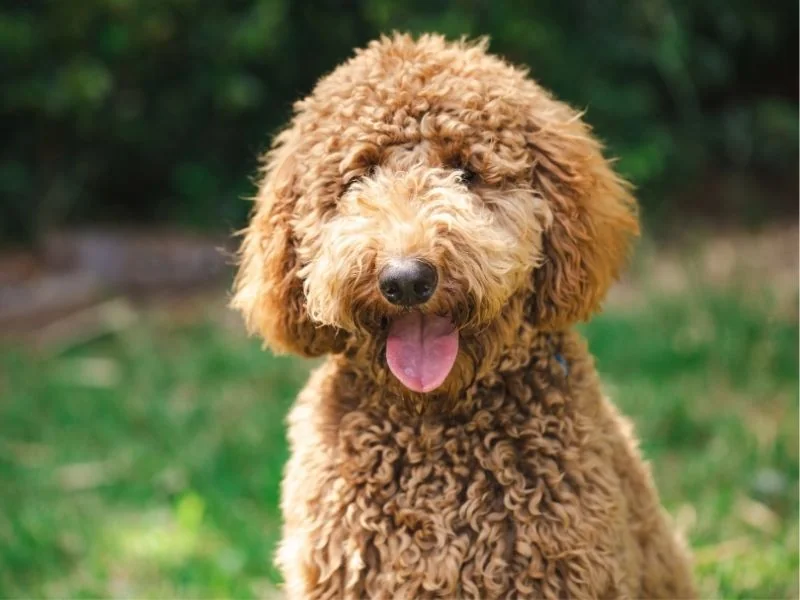
The Goldendoodle is the standard bearer of the designer breed movement. The combination of the Golden Retriever's famously patient, gentle temperament with Poodle intelligence and low-shedding genetics produces a dog that is consistently described as affectionate, trainable, and good with children. Exercise needs are marked, particularly from Standard Poodle lines. The Goldendoodle is available in Miniature, Medium, and Standard sizes depending on which Poodle size was used. Health testing of parents for hip dysplasia, heart conditions, and eye conditions is essential.
Labradoodle The Original
The original designer breed, created in Australia in 1988. The Labradoodle pairs Labrador sociability and trainability with Poodle intelligence and low-shedding genetics. Widely used as guide dogs, therapy dogs, and assistance animals. The Australian Labradoodle is a more established multi-generation version developed over decades and is more consistent in coat and temperament than first-generation crosses. Standard Labradoodles are reliable and well-suited to active families. Hip and elbow dysplasia screening for both parents is essential. Exercise needs are high across all size variants.
Cavapoo Best for Apartment Living
The Cavapoo combines the Cavalier King Charles Spaniel's gentle, lap-friendly disposition with Poodle intelligence and low-shedding coat genetics. They tend to be smaller, calmer, and more adaptable to apartment and city living than the larger Doodle varieties. Deeply affectionate and prone to separation anxiety if not carefully managed. The Cavalier parent carries a notable burden of inherited health conditions including Mitral Valve Disease and Syringomyelia (a painful neurological condition), making Cavalier health testing of breeding parents critically important. Always verify MVD and Syringomyelia screening of the Cavalier parent.
Cockapoo Established and Popular
One of the oldest designer breeds, popular since the 1960s in the United States. Combines the Cocker Spaniel's cheerful, affectionate character with Poodle trainability. Cockapoos are playful, social, and adaptable. Their wavy to curly coats require regular grooming and professional trimming every 6 to 8 weeks. Progressive Retinal Atrophy is a concern from both Cocker and Poodle lines. Ear infections are common given the floppy ears from both parents. An excellent all-round family companion in a manageable size.
Maltipoo Best Small Companion
The Maltipoo pairs the Maltese's centuries-old companion temperament with Poodle intelligence. Deeply affectionate and suited to apartment living. The coat requires daily brushing and professional grooming every 4 to 6 weeks. Very prone to separation anxiety given both parent breeds' companion-oriented nature. Dental disease is the most major recurring health challenge. Excellent for retirees, remote workers, and households without young children. For a full profile see our dedicated Maltipoo breed guide.
Schnoodle Versatile and Alert
The Schnoodle pairs Schnauzer intelligence, alertness, and loyalty with Poodle trainability. Available from Toy to Giant size depending on Schnauzer parent used. Schnoodles tend to be spirited, smart, and devoted to their families. They can be vocal alert dogs. The double low-shedding genetics from both parent breeds makes them well-suited to allergy-sensitive households. The Schnauzer's tendency toward stubbornness means consistent positive training is important from day one. A committed family that wants an engaged, trainable smaller companion often finds the Schnoodle an excellent fit.
Pomsky High Maintenance
The Pomsky is one of the most visually striking designer breeds, with Husky colouring and markings in a more compact body. Produced through artificial insemination because of the size difference between parents. Size and appearance are among the most variable of any designer breed. Pomskies typically inherit the Husky's strong will and the Pomeranian's bold personality, making them demanding to train without consistent positive reinforcement. Their double coat sheds heavily and requires considerable brushing. Not recommended for first-time dog owners. Social media has driven demand far beyond what responsible breeding supply can meet, making puppy mills a serious problem in this cross.
Puggle Moderate Exercise Needs
The Puggle combines two distinctly different dogs and the results are genuinely varied. Puggles can inherit the Pug's shortened muzzle to varying degrees, which is a welfare consideration. Those with longer muzzles than either parent are actually healthier than the purebred Pug. Beagle scent drive is strong in many Puggles and requires a securely fenced environment and reliable recall training. Generally sociable, affectionate, and food-motivated. Exercise needs are moderate. Beagle vocal tendencies (howling and barking) are common. A reasonable middle-ground option for owners who want a small to medium companion without extreme exercise needs.
Health Considerations for Designer Dogs
The health of any designer dog is only as good as the health testing done on both parent dogs before breeding. This is the point that the commercial appeal of designer breeds most consistently obscures. Puppies sold at meaningful premiums with fashionable names and appealing photographs do not automatically come with healthier genetics than the animals that produced them.
For any designer breed, research the clear health conditions in both parent breeds and ask any breeder what screening they conduct for those conditions. For a Goldendoodle this means OFA hip and elbow evaluations, cardiac clearance, and PRA eye screening for both parents. For a Cavapoo it means MVD (heart) and Syringomyelia screening for the Cavalier parent. A breeder who cannot or will not provide these clearances should not be considered regardless of how appealing their puppies appear.
How to Choose a Responsible Breeder
Green Flags: Responsible Breeder
- Health tests both parent dogs and shares certificates
- Raises puppies in a home environment with regular socialisation
- Asks you detailed questions about your lifestyle before accepting you
- Offers a health guarantee and lifetime breeder support
- Has a waiting list and does not always have puppies available
- Invites you to visit and meet the parent dogs
- Is transparent about the generation (F1, F1b, etc.) of each litter
Red Flags: Walk Away
- Cannot or will not provide health test results for parent dogs
- Has puppies available immediately, always, with no waiting list
- Sells via third-party pet shops, brokers, or online marketplaces
- Emphasises colour, "teacup" size, or rare markings as primary selling points
- Will not let you visit or meet the mother dog
- Breeds multiple different crosses simultaneously from many litters
- Price is unusually low for the breed, or payment methods are cash-only
Consider Rescue Breed-specific designer dog rescues exist for most popular crosses, including Doodle rescues and Cavapoo rescues. Adopting from rescue means giving a home to a dog that needs one, bypassing the puppy mill risk entirely, often getting a dog whose adult temperament and coat type are already known, and typically paying a fraction of the purchase price of a puppy. It is worth searching rescues thoroughly before committing to a breeder purchase.
Is a Designer Breed Right for You?
Designer breeds genuinely suit many households well. The combination of reduced shedding, Poodle intelligence, and the temperamental warmth of the retriever, spaniel, or companion breeds they are typically crossed with produces dogs that work well in a very wide range of lifestyles. For allergy-conscious households, families with children, and owners who want a trainable companion without the intensity of a high-drive working breed, many designer crosses are excellent choices.
The important caveat is approaching the choice with realistic expectations about variability, committing to researching and verifying breeder quality, understanding that grooming demands for most Poodle crosses are marked, and accepting that the traits you see in social media photographs are not guaranteed in every individual puppy of the same cross.
If the reduced predictability of a designer cross concerns you, an established purebred from a health-tested line may be a better fit. If you want a companion with specific traits but are flexible on appearance, a good rescue dog of mixed heritage can offer exactly what you need with none of the ethical concerns of the commercial designer breed market.