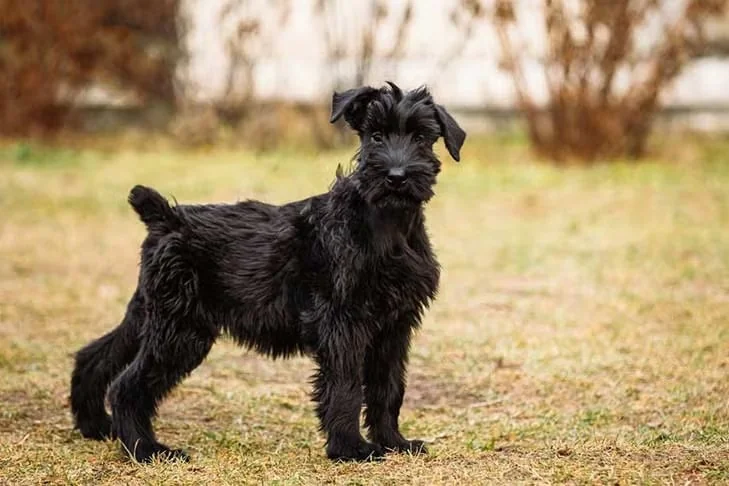

The Giant Schnauzer is a serious working dog in a striking package — originally bred to drive cattle and guard property, and that working drive has not been bred out. They need experienced handling, at least 90 minutes of vigorous daily exercise, and consistent structured training from puppyhood, or their intelligence and size become genuinely difficult to manage. Their wiry double coat requires hand-stripping or clipping every 6–8 weeks — a real time and cost commitment most prospective owners underestimate. Not a breed for first-time dog owners or low-exercise households.
Giant Schnauzer Overview and Quick Facts
The Giant Schnauzer, also known as the Riesenschnauzer, is the largest of the three Schnauzer breeds. Originally developed in Bavaria to drive cattle and guard property, this powerful working breed excels in police work, search and rescue, competitive dog sports, and devoted family companionship when matched with an experienced, active owner.
Giant Schnauzer Strengths
- Exceptionally intelligent and highly trainable
- Fiercely loyal and protective of family
- Low shedding compared to many large breeds
- Thrives in active households with structured routines
- Excellent natural guard dog with alert temperament
- Long lifespan for a large working breed (12 to 15 years)
Important Considerations
- Not recommended for first-time dog owners
- Requires 90 to 120 minutes of daily vigorous exercise
- High grooming maintenance and professional grooming costs
- Can be dominant or territorial without consistent leadership
- Not ideal for homes with toddlers or small pets
- Needs a securely fenced yard and experienced handling
History and Origins of the Riesenschnauzer
The Giant Schnauzer originated in 17th-century Bavaria and Württemberg, Germany, where farmers needed a powerful, intelligent dog to drive cattle to market and guard property. Breeders developed the breed by crossing Standard Schnauzers with larger working breeds including rough-haired sheepdogs and black Great Danes. The Bouvier des Flandres also likely contributed to the Giant Schnauzer's lineage.
For many years the breed was known as the Münchener, reflecting its prominence in Munich. Just before World War I, the Giant Schnauzer transitioned from farm work to police and military service, training at schools in Berlin and other major German cities. By 1925 the breed earned a formal utility dog rating for its working abilities. During both World Wars, Giant Schnauzers served as guard, trench, and messenger dogs. The American Kennel Club officially recognized the Giant Schnauzer in 1930.
Physical Characteristics and Size Standards
The Giant Schnauzer is a powerful, square-built dog with a dense, wiry double coat, hallmark bushy eyebrows, and a distinctive beard. The breed's appearance is unmistakable and commands attention.
Giant Schnauzer At a Glance
Every shade of Giant Schnauzer coat features a dark facial mask that stresses expression, with lighter coloring on the eyebrows, whiskers, cheeks, chest, legs, and under the tail. The wiry outer coat protects against harsh weather, while the softer undercoat provides insulation.
Temperament and Personality Traits
The Giant Schnauzer is described as composed, watchful, courageous, easily trained, deeply loyal to family, playful, and commanding when aroused. This description holds true in practice. The Giant Schnauzer is not a casual companion dog. It forms intense bonds with its family, takes its protective role seriously, and requires and genuinely enjoys having a job to do.
Key Personality Traits
- Loyal: Forms deep, lasting bonds with immediate family members
- Intelligent: Quick to learn and excels in obedience, protection, and agility work
- Alert: Naturally watchful and an outstanding guardian and watchdog
- Confident: Fearless and self-assured, not anxious or reactive
- Reserved with strangers: Initially wary but warms with proper introductions
- Playful: Deeply playful and affectionate once trust is established
Not for first-time owners The Giant Schnauzer's intelligence and dominance can overwhelm inexperienced handlers. Consistent, firm leadership from day one is essential. Without it, they can become territorial, stubborn, or difficult to manage.
Giant Schnauzer Trait Ratings
Exercise Requirements and Activity Needs
The Giant Schnauzer is a high-energy working breed that needs substantial daily activity, both physical and mental. Plan for 90 to 120 minutes of vigorous exercise every day. This is not a casual walk-around-the-block dog.
Best Exercise Activities for Giant Schnauzers
- Long off-leash runs in a securely fenced area
- Agility, Schutzhund, or protection sports
- Jogging or cycling alongside their owner
- Hiking and trail running
- Advanced obedience and trick training
- Tracking, nose work, and scent games
Mental stimulation matters as much as physical exercise A Giant Schnauzer who receives physical exercise but no mental challenge will still become restless and destructive. Incorporate puzzle feeders, obedience drills, and new training challenges into the daily routine.
Giant Schnauzers do not do well in apartments or in homes where owners are absent for long stretches. They need space, stimulation, and consistent human engagement. A securely fenced yard with a tall, reinforced fence is strongly recommended.
Grooming Guide and Coat Maintenance
The Giant Schnauzer's wiry double coat is one of the breed's defining features and one of its most demanding maintenance requirements. While they shed less than many large breeds, their coat requires consistent, skilled grooming to stay healthy and maintain its characteristic texture.
Grooming Schedule for Giant Schnauzers
Start grooming routines early Introduce puppies to brushing, ear handling, and nail trimming from 8 weeks onward. Giant Schnauzers that learn to accept grooming as puppies are far easier to maintain as adults.
Shedding and Allergy Considerations
Giant Schnauzers shed minimally compared to many large breeds and produce less dander, which makes them more tolerable for some allergy sufferers. However, no dog is truly hypoallergenic. Individual allergy responses vary significantly. Regular brushing, monthly baths, and proper nutrition help keep allergens to a minimum.
Health Concerns and Screening Recommendations
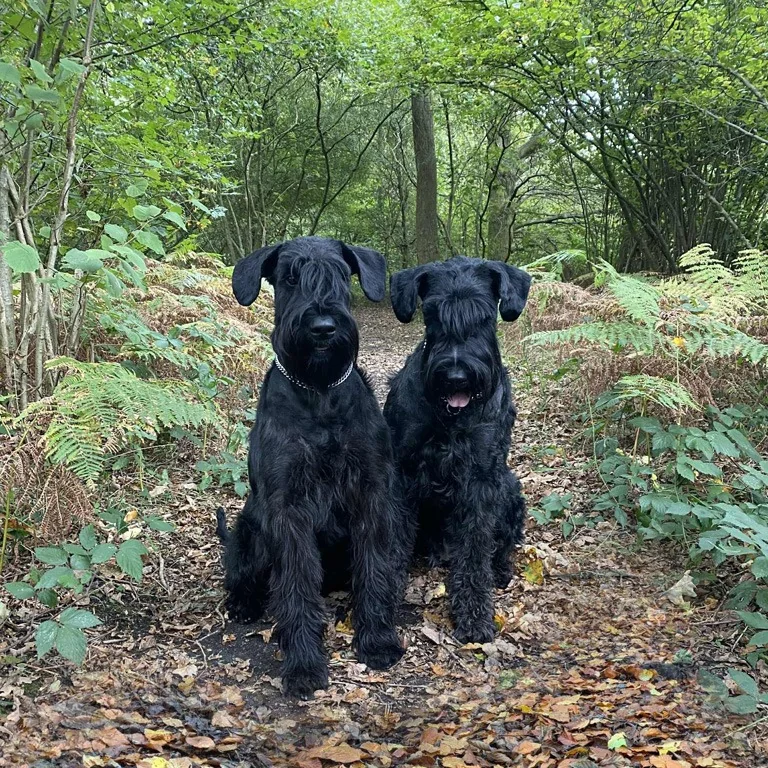
Giant Schnauzers are generally strong dogs with a lifespan of 12 to 15 years, excellent for a large working breed. However, like all large breeds, they are predisposed to certain inherited and developmental conditions. Regular veterinary checkups, appropriate nutrition, and responsible breeding practices significantly reduce risk.
Common Health Conditions in Giant Schnauzers
Hip and Elbow Dysplasia
Hip dysplasia is a developmental condition where the hip joint does not form properly, causing looseness and eventual arthritis. Elbow dysplasia affects the same developmental process in the front limbs. Both are genetic in origin. Management typically involves weight control, joint supplements, anti-inflammatory medication, and in severe cases, surgery. Purchasing from breeders who screen parent dogs for dysplasia significantly reduces risk.
Bloat (GDV - Gastric Dilatation-Volvulus)
Bloat is a life-threatening emergency in which the stomach fills with gas and, in severe cases, twists on itself (GDV), cutting off blood supply to organs. Signs include abdominal distension, restlessness, and unproductive retching. If you observe these symptoms, go to a veterinary emergency clinic immediately. Feeding two smaller meals rather than one large meal daily and avoiding vigorous exercise within an hour of feeding reduces risk.
Hypothyroidism
An autoimmune condition that destroys hormone-producing cells in the thyroid gland. Signs develop gradually and include lethargy, unexplained weight gain, dull coat, and recurring skin or ear infections. Hypothyroidism is manageable with lifelong daily medication. Affected dogs typically live normal, healthy lives with treatment.
Osteochondritis Dissecans (OCD)
A developmental disease affecting cartilage and bone in young, large-breed dogs, causing pain and stiffness in the elbows or shoulders. Diet plays an important role. Feeding Giant Schnauzer puppies a large-breed formula with appropriate calcium-to-phosphorus ratios and avoiding excessive protein helps prevent abnormal cartilage development. Treatment may involve surgery.
Osteosarcoma
Giant Schnauzers have an elevated risk for osteosarcoma, an aggressive form of bone cancer more common in large and giant breeds. Early detection substantially improves treatment outcomes. Be alert to persistent lameness, swelling around limbs, or pain that does not resolve with rest.
Recommended Health Screening for Giant Schnauzers
Training Tips and Socialization Strategies
The Giant Schnauzer is one of the most trainable breeds in the world when handled correctly. Their intelligence is a double-edged sword: they learn quickly but will also test boundaries and exploit inconsistency. They excel in obedience, protection work, agility, search and rescue, and military or police service.
Training Principles That Work for Giant Schnauzers
- Start early: Begin basic commands and crate training as soon as your puppy comes home (8 weeks onward)
- Use positive reinforcement: Reward-based training outperforms punishment-based methods with this breed
- Be consistent: Inconsistent rules create confusion and dominant behavior. Every family member must follow the same rules
- Keep sessions short and varied: Giant Schnauzers are easily bored by repetition. Vary exercises and increase difficulty
- Socialize extensively: Expose puppies to different people, dogs, sounds, and environments from 8 weeks onward to prevent over-guardedness as adults
- Channel energy into structured activity: Dog sports, obedience competitions, or protection work give this breed a purposeful outlet
Professional guidance is strongly recommended First-time large-breed owners should enroll in a structured puppy class and work with a trainer experienced in high-drive working breeds. Early investment in professional guidance pays dividends for years.
Living With a Giant Schnauzer
Owning a Giant Schnauzer is a clear lifestyle commitment. This breed thrives with active owners who enjoy outdoor activities, structured training, and consistent engagement. They do not do well left alone for long periods or in sedentary households.
Is a Giant Schnauzer Right for Your Home?
Great fit for:
- Experienced large-breed owners
- Active individuals or families with outdoor lifestyles
- Homes with a securely fenced yard
- Families with children 10 years and older
- Owners who want a protective, loyal companion
Not ideal for:
- First-time dog owners
- Apartment living without dedicated exercise plans
- Families with toddlers or very small children
- Homes with cats or small dogs without careful introduction
- Owners frequently away from home for long hours
Giant Schnauzers With Children
Well-trained Giant Schnauzers are affectionate and playful with children. However, their size and energy level make them better suited to families with older children (generally 10 years and above) who understand how to interact respectfully with a large dog. Toddlers can easily be knocked over during enthusiastic play. Supervision is always necessary.
Giant Schnauzers With Other Pets
Giant Schnauzers raised alongside other large dogs can coexist peacefully with proper training. They are generally not recommended for households with cats or small dogs, as their strong prey drive can make these relationships challenging. Early socialization significantly improves outcomes.
Nutrition and Feeding Guidelines
Adult Giant Schnauzers typically need three to four cups of high-quality, large-breed formula dry food per day, split into two meals. Large-breed formulas contain controlled calcium and phosphorus ratios that support proper bone development and reduce the risk of joint issues. Avoid overfeeding. Giant Schnauzers can be prone to obesity and bloat. Always consult your veterinarian for precise feeding recommendations based on your dog's age, weight, and activity level.
Puppy Guide and Finding a Responsible Breeder
Giant Schnauzer puppies from reputable breeders typically cost between $1,200 and $3,500, depending on pedigree, health testing, and breeder reputation. Budget for ongoing monthly costs including professional grooming, premium food, and veterinary care.
What to Look for in a Healthy Giant Schnauzer Puppy
- Bright, clear eyes with no discharge
- Shiny coat with no bald patches or excessive scratching
- Energetic, curious demeanor and willingness to engage with people
- Confident temperament, not overly fearful or aggressive toward siblings
- Up-to-date vaccinations, deworming records, and microchip documentation
Choosing a Responsible Giant Schnauzer Breeder
- Registered with the Giant Schnauzer Club of America or equivalent breed club
- Breeds according to AKC or FCI health guidelines
- Screens parent dogs for hip dysplasia, elbow dysplasia, thyroid, and eye conditions
- Invites you to meet both parent dogs and observe their temperament
- Asks you questions. A good breeder vets buyers carefully
- Provides ongoing support and remains a contact resource after purchase
Consider adoption Giant Schnauzer rescues exist across the US and Europe. Adult rescue dogs offer the advantage of a known temperament and are often already house-trained. Search Schnauzer-specific rescue organizations or check local shelters.
Cost of Ownership and Budget Planning
Beyond the initial puppy price, responsible Giant Schnauzer ownership requires budgeting for ongoing expenses. Understanding these costs helps ensure you can provide the care this breed deserves throughout its 12 to 15 year lifespan.
Estimated Annual Costs for a Giant Schnauzer
These estimates do not include emergency veterinary care, which can cost thousands of dollars. Pet insurance or a dedicated emergency fund is strongly recommended for large breeds prone to conditions like bloat or orthopedic issues.