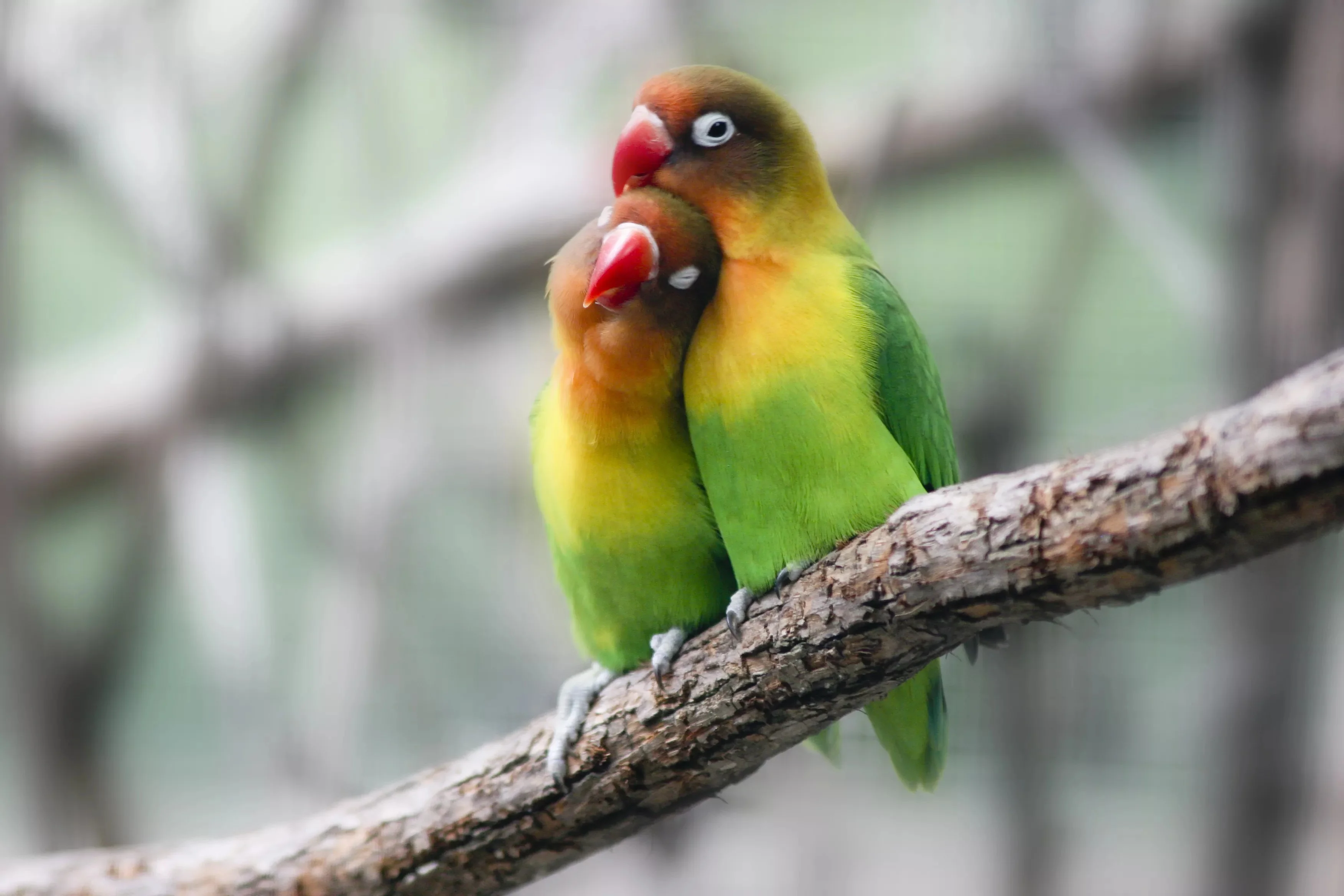
Pair of lovebirds together
Updated March 23, 2024 • 7 min read

Lovebird Care Guide: Social Needs, Diet, and Health

Lovebirds are named for their strong pair bonding and affectionate nature. These small parrots form deep attachments to mates or human caregivers, making them rewarding but demanding companions. Understanding their social requirements and proper care ensures a fulfilling relationship with these energetic birds.

Social Requirements and Companionship

Lovebirds are highly social flock animals that require significant interaction. A single lovebird needs several hours of daily human attention to prevent loneliness and behavioral issues. If you cannot provide this level of engagement, keeping them in same sex pairs is recommended. Note that bonded pairs may become less interested in human interaction but will be happier with avian companionship.

Cage Setup and Environment

Minimum cage size for one lovebird is twenty four by twenty four by thirty inches. For a pair, provide at least thirty six by twenty four by thirty six inches. Include horizontal bars for climbing, natural wood perches of varying diameters, and safe toys. Place the cage in a quiet area with natural light but away from drafts, direct sunlight, and kitchen fumes. Provide out of cage time daily in a safe, supervised environment.

Nutrition and Feeding

Lovebirds require a balanced diet of high quality pellets (sixty to seventy percent), fresh vegetables like dark leafy greens and carrots (twenty to thirty percent), and limited fruits or seeds as treats (ten percent). Avoid avocado, chocolate, caffeine, alcohol, and salty foods. Provide fresh water daily and clean food dishes regularly to prevent bacterial growth.

Behavior and Training

Lovebirds are intelligent and can learn simple tricks with positive reinforcement. They may also mimic sounds or words, though not as clearly as larger parrots. Provide mental stimulation through foraging toys, puzzle feeders, and destructible items. Respect their need for rest and avoid forcing interaction when they show signs of stress like feather fluffing or hiding.

Health Monitoring

Watch for warning signs: fluffed feathers, lethargy, changes in droppings, reduced vocalization, sitting at the cage bottom, or discharge from eyes or nostrils. Schedule annual checkups with an avian veterinarian. Maintain proper humidity (forty to sixty percent) and stable temperatures (sixty five to eighty degrees Fahrenheit) to support respiratory health.

Do lovebirds need a companion?
Lovebirds are highly social and form strong pair bonds. A single lovebird requires several hours of daily human interaction. If you cannot provide this attention, keeping them in pairs is recommended. However, bonded pairs may become less interested in human interaction.
What do lovebirds eat?
Lovebirds need a diet of high quality pellets (60-70%), fresh vegetables like dark leafy greens and carrots (20-30%), and limited fruits or seeds as treats (10%). Avoid avocado, chocolate, caffeine, and salty foods. Provide fresh water daily.
How big should a lovebird cage be?
Minimum cage size for one lovebird is 24x24x30 inches. For a pair, provide at least 36x24x36 inches. Include horizontal bars for climbing, multiple perches, and safe toys. Place the cage in a quiet area with natural light but away from drafts and direct sun.