
The right grooming tool depends entirely on coat type, not personal preference: short-haired cats need only a rubber grooming mitt and slicker brush, while long-haired cats (Persians, Maine Coons, Ragdolls) require a stainless steel comb, de-shedding tool, and far more frequent sessions to prevent matting. Matting is not just cosmetic — trapped mats pull on skin, trap moisture, and can hide wounds, mites, parasites, or infections underneath. For severely matted coats, professional grooming is safer than attempting to cut mats out yourself, which risks injuring the skin beneath.
Regular grooming keeps your cat healthy, comfortable, and looking their best. Whether you have a sleek shorthair or a luxurious Persian, having the right tools makes grooming easier for both you and your feline friend. This thorough guide covers essential cat grooming tools, how to use them properly, and which products work best for different coat types and grooming needs.
Quick Start Guide
Short-haired cats: Slicker brush + rubber grooming mitt + nail clippers
Long-haired cats: Stainless steel comb + slicker brush + de-shedding tool + nail clippers + grooming scissors
All cats: Cat-specific shampoo, ear cleaner, and toothbrush
Essential Brushing Tools
Stainless Steel Comb
Best for: Long-haired cats, detangling, finishing toolA high-quality stainless steel comb is non-negotiable for long-haired breeds like Persians. Look for one with both wide and narrow teeth.
- Wide teeth: Remove loose fur and detect tangles
- Narrow teeth: Work through mats and reach undercoat
- Rounded tips: Prevent scratching sensitive skin
How to use: Start at the head and work toward the tail, gently working through sections. Always follow brushing with a comb to ensure no tangles remain.
Slicker Brush
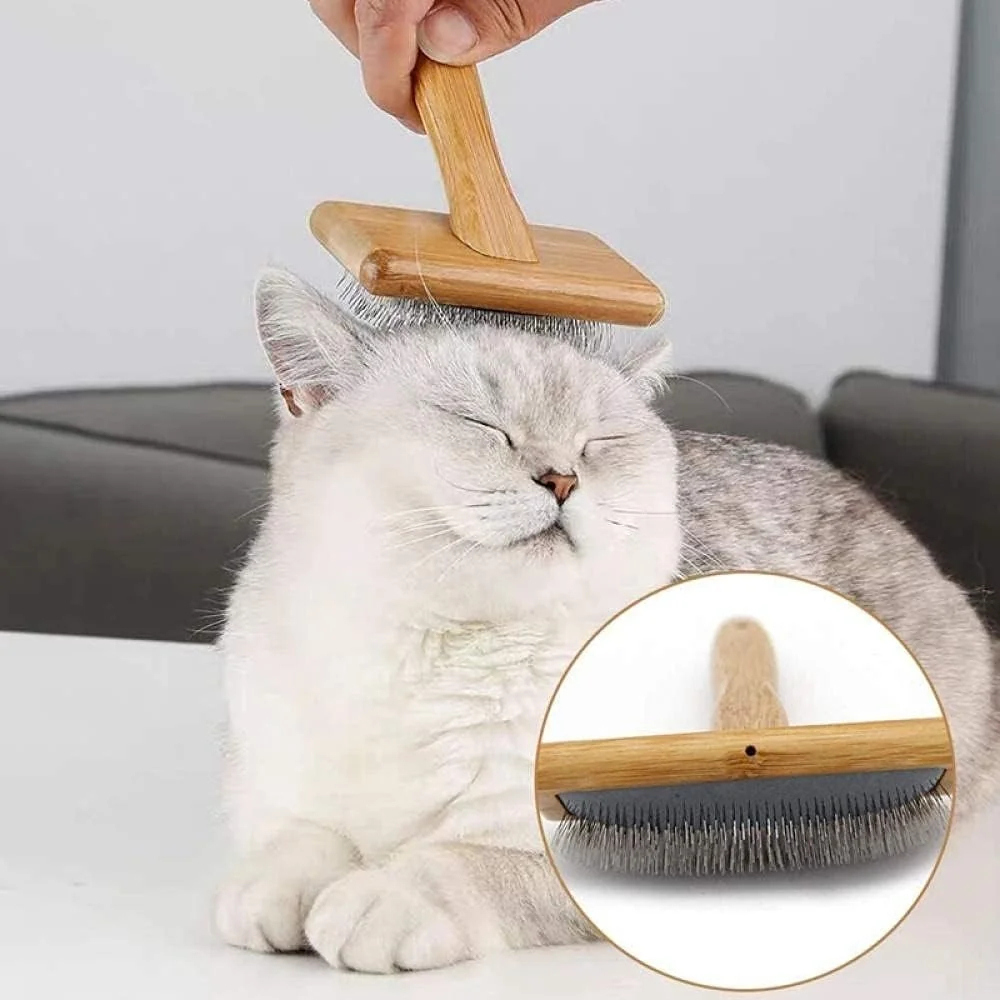
Best for: Daily brushing, all coat types, removing loose furSlicker brushes feature fine wire bristles close together on a flat or curved surface. They're excellent for removing loose hair and preventing mats.
- Self-cleaning models: Button retracts bristles for easy fur removal
- Gentle bristles: Choose flexible wires to avoid skin irritation
- Ergonomic handle: Reduces hand fatigue during grooming sessions
How to use: Brush in the direction of hair growth using short, gentle strokes. Don't press too hard-the bristles should glide through the coat, not scrape the skin.
De-Shedding Tool
Best for: Reducing shedding, removing undercoat, seasonal blowoutsDe-shedding tools reach beneath the topcoat to remove loose undercoat fur before it ends up on your furniture.
- Reduces shedding by up to 90% when used regularly
- Prevents hairballs by removing loose fur before cats ingest it
- Use 1-2 times weekly during shedding season
How to use: Use gentle pressure and short strokes. Don't overuse-5-10 minutes per session is sufficient. Avoid using on mats or tangles.
Rubber Grooming Mitt
Best for: Short-haired cats, cats who hate brushes, bath timeGrooming mitts fit over your hand like a glove with rubber nubs that catch loose fur while massaging your cat's skin.
- Feels like petting-ideal for cats resistant to brushes
- Can be used wet or dry
- Easy to clean-just peel off collected fur
How to use: Stroke your cat in their favorite petting spots. The rubber nubs will catch loose fur while distributing natural oils.
Nail Care Tools
Cat Nail Clippers
Best for: Regular nail maintenance, all catsNever use human nail clippers on cats. Choose clippers specifically designed for feline nails.
- Guillotine-style: Blade slides across nail; good for beginners
- Scissor-style: Works like scissors; offers more control
- Grinder/Dremel: Files nails down gradually; quieter option for anxious cats
How to use: Trim only the clear tip of the nail, avoiding the pink "quick" which contains blood vessels and nerves. If you accidentally cut the quick, apply styptic powder to stop bleeding. Trim every 2-3 weeks.
Safety First
Always have styptic powder or cornstarch on hand when trimming nails. If your cat becomes stressed, stop and try again later. Never force nail trimming as it creates negative associations.
Bathing and Cleaning Supplies
Cat-Specific Shampoo
Best for: Bathing, skin conditions, flea treatmentHuman shampoo disrupts cats' skin pH balance. Use only products formulated for cats.
- Hypoallergenic formulas: For sensitive skin
- Medicated shampoos: For specific skin conditions (vet-prescribed)
- Waterless foam: For cats who hate water baths
How to use: Wet coat thoroughly, apply small amount of shampoo, lather gently avoiding eyes and ears, rinse completely. Long-haired cats benefit from conditioner. Bathe every 4-6 weeks or as needed.
Ear Cleaning Solution
Best for: Ear maintenance, preventing infectionsRegular ear cleaning prevents wax buildup and infections, especially in breeds prone to ear issues.
- Vet-formulated solutions: Safe and effective
- Avoid alcohol-based products: Can irritate sensitive ear tissue
- Cotton balls or gauze: Never use cotton swabs deep in ear canal
How to use: Apply solution to cotton ball, gently wipe visible parts of ear. Never insert anything into the ear canal. Clean monthly or as recommended by your vet.
Dental Care Kit
Best for: Preventing dental disease, fresh breathDental disease affects 70% of cats by age 3. Regular brushing prevents painful and expensive dental problems.
- Cat toothbrush: Finger brush or small-headed brush
- Enzymatic toothpaste: Never use human toothpaste (toxic to cats)
- Dental treats: Supplemental care, not replacement for brushing
How to use: Start slowly, letting your cat taste the toothpaste. Gradually introduce brushing, aiming for daily sessions. Focus on outer surfaces where plaque accumulates.
Professional-Grade Tools
Grooming Scissors
Best for: Trimming mats, sanitary trims, paw padsBlunt-tipped grooming scissors allow safe trimming of problem areas without risking injury.
- Blunt tips: Prevent accidental punctures
- Sharp blades: Clean cuts without pulling
- Curved blades: Better for contouring around body
How to use: Carefully trim matted fur close to the skin, placing fingers between mat and skin as a barrier. Trim hair between paw pads and around sanitary areas as needed.
Professional Clippers
Best for: Severe matting, lion cuts, show groomingFor heavily matted coats or owners who prefer shorter styles, professional clippers are essential.
- Quiet motor: Reduces cat stress
- Cool-running: Prevents burns on sensitive skin
- Multiple blade sizes: #10 for close cuts, #15 for sanitary areas
How to use: Clip in direction of hair growth, keeping blade flat against skin. For severe matting, consider professional grooming to avoid injury. Always use clipper coolant spray.
Grooming Tools by Coat Type
| Coat Type | Essential Tools | Grooming Frequency |
|---|---|---|
| Short-Haired (Domestic Shorthair, Siamese) |
Rubber mitt, slicker brush, nail clippers | Weekly brushing Bi-weekly nails |
| Medium-Haired (Maine Coon, Norwegian Forest) |
Steel comb, slicker brush, de-shedding tool, nail clippers | 2-3x weekly brushing Bi-weekly nails |
| Long-Haired (Persian, Ragdoll, Himalayan) |
Steel comb, slicker brush, de-shedding tool, grooming scissors, clippers, nail clippers | Daily brushing Bi-weekly nails Monthly baths |
| Hairless (Sphynx, Peterbald) |
Gentle wipes, cat shampoo, ear cleaner, nail clippers | Weekly baths Weekly ear cleaning Bi-weekly nails |
Grooming Tips for Success
Start Early and Go Slow
Kittens who are gently handled and introduced to grooming tools grow into cats who tolerate (or even enjoy) grooming. Start with brief sessions, offering treats and praise. Never force grooming-if your cat becomes stressed, stop and try again later.
Create a Calm Environment
Groom in a quiet room away from other pets and distractions. Use pheromone sprays like Feliway if your cat is anxious. Play soft music or speak in soothing tones throughout the session.
Know When to Call a Professional
Seek professional grooming help if:
- Your cat has severe matting close to the skin
- Your cat becomes aggressive during grooming
- You notice skin issues, lumps, or abnormalities
- You need a specialized cut (lion cut, show trim)
Budget-Friendly Tip
You don't need every tool immediately. Start with a quality comb and brush suited to your cat's coat type. Add specialized tools as needed. Many cats do perfectly well with just 2-3 basic tools used consistently.