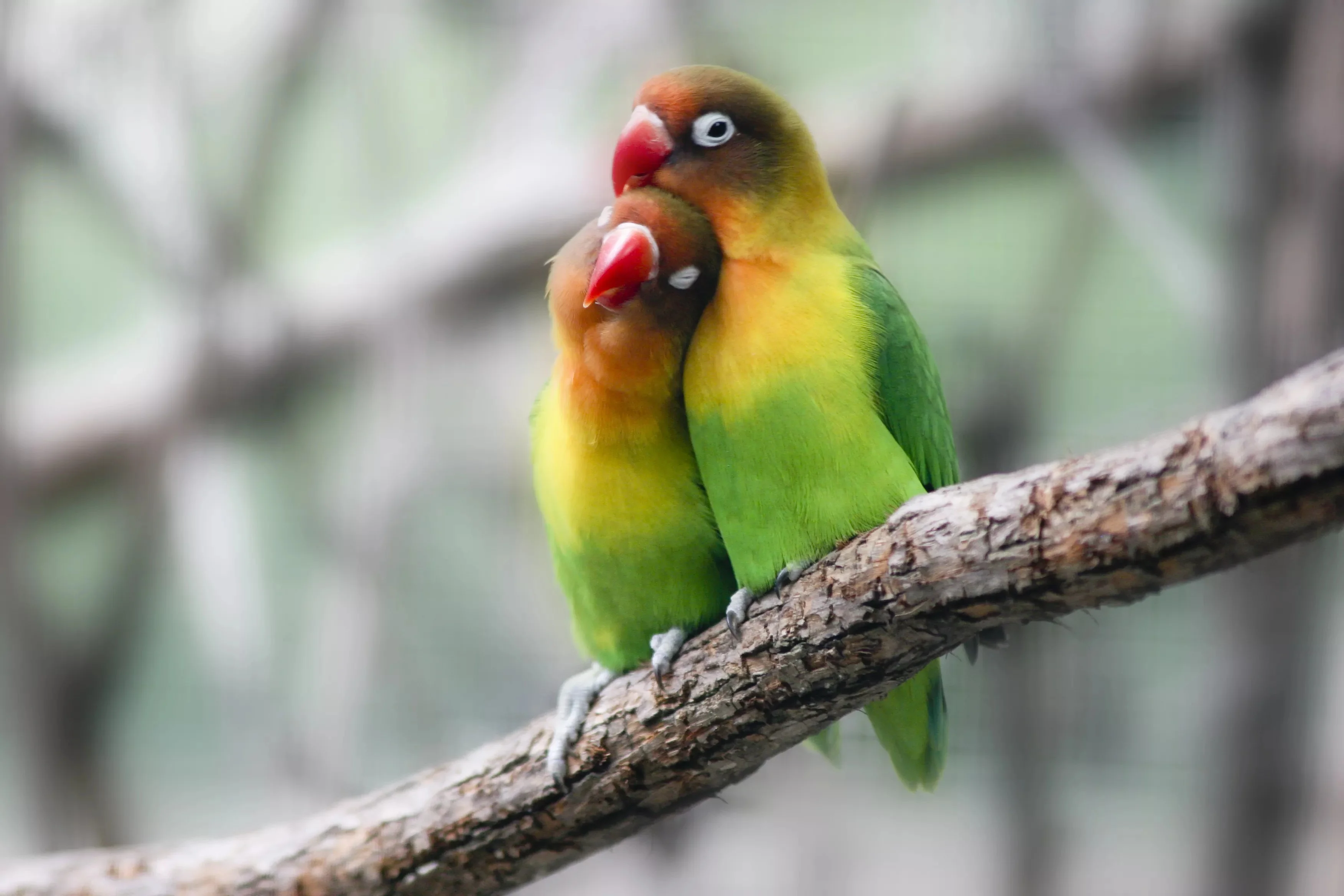

Lovebirds are named for their strong pair bonding and affectionate nature. These small parrots form deep attachments to mates or human caregivers, making them rewarding but demanding companions.
Social Requirements and Companionship
Lovebirds are highly social flock birds that require notable interaction. A single lovebird needs several hours of daily human attention. If you cannot provide this level of engagement, keeping same-sex pairs is often better.
Cage Setup and Environment
Minimum cage size for one lovebird is 24 x 24 x 30 inches. For a pair, provide at least 36 x 24 x 36 inches. Include horizontal bars, natural perches, toys, and daily supervised out-of-cage time.
Nutrition and Feeding
Feed quality pellets, vegetables, and small fruit portions. Avoid avocado, chocolate, caffeine, alcohol, and salty foods.
Behavior and Training
Lovebirds are intelligent and can learn tricks through positive reinforcement. Provide foraging toys and enrichment.
Health Monitoring
Watch for fluffed feathers, lethargy, reduced appetite, changes in droppings, or discharge from eyes and nostrils. Schedule avian vet checkups yearly.
Frequently Asked Questions
Do lovebirds need a companion?
Lovebirds are social birds. A single bird needs regular human interaction. If unavailable often, pairs are better.
What do lovebirds eat?
Pellets, vegetables, some fruit, and fresh water daily.
How big should a lovebird cage be?
At least 24x24x30 inches for one bird.
Medical disclaimer: This article is for educational purposes only and does not constitute veterinary advice. Always consult a licensed veterinarian for diagnosis and treatment of your pet's health conditions.