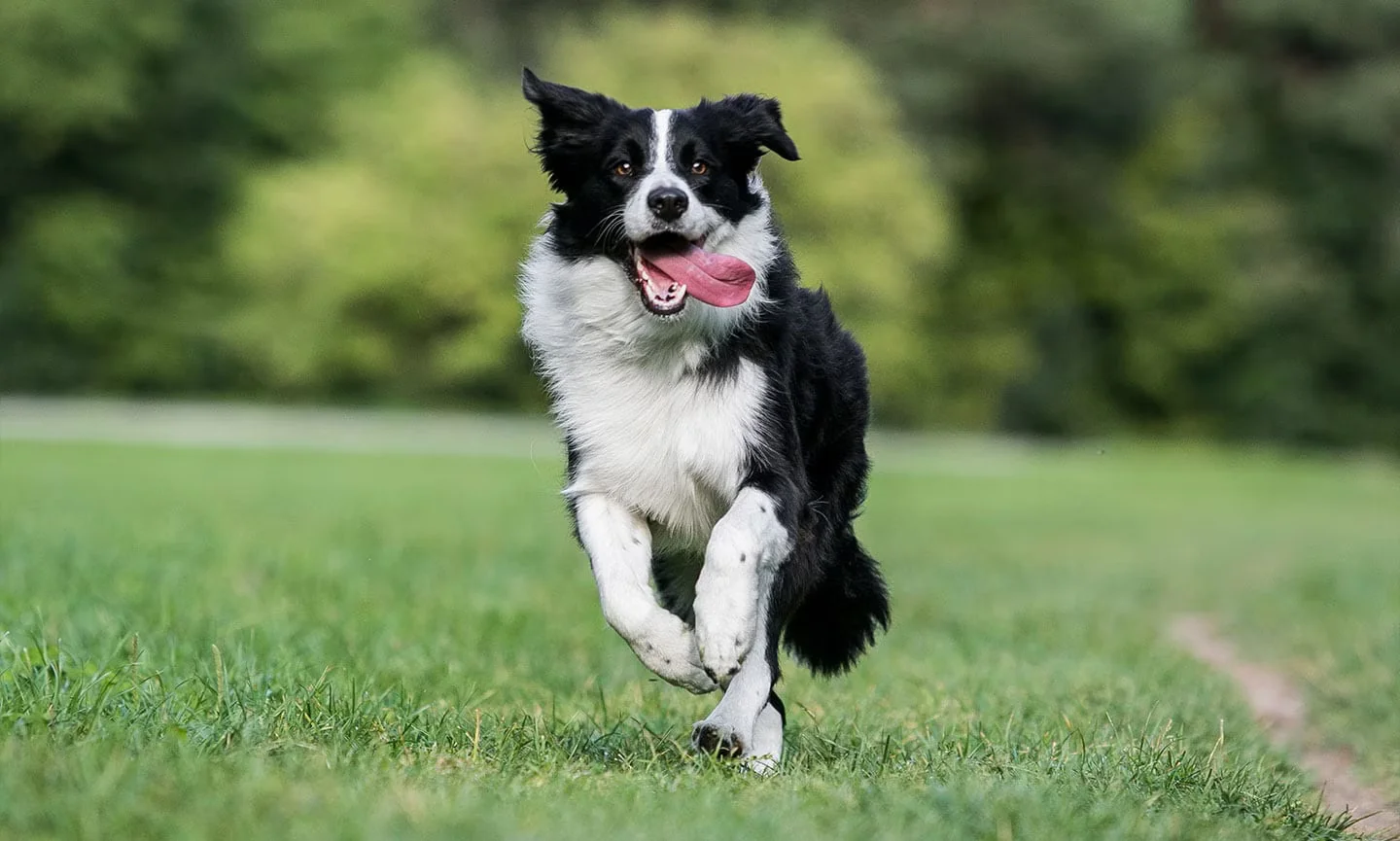

Border Collie at a Glance
- Widely regarded as the most intelligent dog breed, originally developed to herd sheep across the Scottish and English border regions
- Needs a minimum of 1 to 2 hours of vigorous daily exercise plus regular mental stimulation or problem behaviours will develop
- Highly sensitive to their owner's emotional state and responds best to positive, consistent training methods
- Herding instinct is hardwired: expect nipping at heels, chasing moving objects, and an intense "eye" stare without proper direction
- Prone to specific genetic health conditions including Collie Eye Anomaly, progressive retinal atrophy, epilepsy, and MDR1 drug sensitivity
- Not recommended for apartment life, inexperienced owners, or families who are away from home for long hours daily
The Border Collie occupies a unique position in the dog world. No other breed combines its level of intelligence, working drive, physical athleticism, and trainability in quite the same way. Chaser, a Border Collie who died in 2019, learned the names of over 1,000 individual objects, a feat never replicated by any other animal tested in controlled research. The AKC ranks Border Collies first in obedience and working intelligence among all dog breeds. That reputation is well earned.
It is also precisely why Border Collies are regularly surrendered to rescue organisations. A mind this sharp in a dog whose genetic purpose is to move and work and problem-solve for hours on end requires an owner who truly understands what they are taking on. This guide covers what Border Collie life actually looks like day to day, not just the highlights.
Quick Stats and Ratings
Border Collie Breed Profile
Breed Characteristic Ratings
Origin and History
The Border Collie's story begins in the rugged borderlands between Scotland and England, where shepherds needed a dog with the intelligence, stamina, and instinct to manage sheep across vast, challenging terrain without constant human direction. The word "collie" is thought to derive from a Celtic term meaning useful or devoted, which tells you everything about what these dogs were bred to do.
Selective breeding intensified during the 18th and 19th centuries as shepherds sought dogs with what became known as the "strong eye," an intense, crouching gaze used to control livestock movement through sheer presence and focus. Unlike many breeds developed for appearance or companionship, Border Collies were refined entirely for working ability. Farmers would organise sheepdog trials to test and compare their dogs' skills, and the best working animals became the most sought-after breeding stock.
The breed's most famous ancestor is Old Hemp, a tricolour dog born in 1893 in Northumberland, England. Old Hemp was extraordinarily calm and controlled with livestock and became a prolific stud dog, with many modern Border Collies tracing their lineage to him. The breed was formally recognised by the AKC in 1995 under the Herding Group, though working Border Collies had been a distinct type for well over a century before that.
Temperament and Personality
Border Collies are described by those who know them well as dogs who study their owners. They are visually attuned to every micro-expression, postural shift, and subtle change in tone. This sensitivity, born from centuries of working alongside shepherds and reading their commands at great distances, makes them extraordinarily responsive partners when properly channelled, and deeply anxious dogs when living in chaotic, unpredictable, or understimulating environments.
Their personality is characteristically alert, energetic, hardworking, and intensely focused. They are not a dog that switches off. A Border Collie that has nothing constructive to engage with will construct its own engagement, and the results are rarely what owners hope for. Destructive chewing, obsessive ball-fetching, tail-chasing, fence-running, barking at shadows, and herding children and other pets are all common expressions of an under-stimulated Border Collie's need to work.
The intense, fixed crouching stare that Border Collies use to control livestock is called "the eye." When your Border Collie fixes this stare on a ball, a child, or the cat, they are not being aggressive. They are activating hardwired herding behaviour. Redirecting this energy into structured activities such as fetch with rules, agility, or trick training is far more effective than trying to suppress it.
Border Collies tend to bond deeply with one or two people in the household. They are not naturally aloof but can be reserved with strangers until they have had time to assess and trust. Many Border Collies are sensitive enough that raised voices, household tension, or inconsistent rules cause visible anxiety. They are genuinely emotional animals who thrive with calm, consistent, and communicative handlers.
Exercise and Mental Stimulation Needs
This is where the honest conversation about Border Collies becomes critically important. These dogs need a minimum of 1 to 2 hours of vigorous physical exercise every single day. Not a stroll. Not a loop around the block. Running, swimming, agility work, fetch on a large field, off-lead trail hiking, or structured herding all meet the physical requirement. A gentle walk does not.
Even more important is mental stimulation. Border Collies bred for work needed to make independent decisions across a hillside for hours at a time. A physically exercised but mentally idle Border Collie is a problem waiting to happen. Mental work can come from formal training sessions, puzzle feeders, scent work, trick training, learning new commands, agility courses, and interactive play that requires the dog to think and make choices.
Agility Training
Combines physical exercise with mental problem-solving. Border Collies dominate this sport and thrive in it.
Herding Trials
The ultimate outlet for their instincts. Even casual herding clinics provide remarkable mental satisfaction.
Flyball and Disc
Fast-paced team sports that provide both physical intensity and focus. Most Border Collies love them.
Scent Work
Excellent mental workout that uses the dog's nose. A 20-minute scent session can tire a Border Collie as effectively as an hour of running.
Border Collies that do not get sufficient exercise and mental stimulation develop recognisable problem behaviours: obsessive ball fixation, fence-pacing, destructive chewing, shadow-chasing, excessive barking, herding family members, and general anxiety. These are not personality flaws. They are the natural result of placing a working dog in an environment that cannot accommodate its needs.
Training a Border Collie
Border Collies learn fast, which is both their greatest asset and a training challenge. They pick up commands quickly, which is wonderful. They also pick up every unintended behaviour and habit just as quickly, which requires handlers to be thoughtful and consistent from the very first day.
Positive reinforcement is the most effective training approach for this breed. Border Collies are sensitive animals and respond very poorly to harsh corrections, raised voices, or punishment-based methods. Force-free training that uses food rewards, praise, and play builds both reliable obedience and a trusting relationship. Because they are so food and play motivated, they are genuinely a pleasure to train when the approach is right.
Keep training sessions short and varied. A Border Collie bored by repetitive drills of the same command will disengage or begin performing the behaviour mechanically without real engagement. Rotate between commands, introduce new challenges regularly, and end sessions before the dog loses focus. Five to ten minutes of genuinely engaged training three times a day produces far better results than a long, monotonous session.
Early socialisation is essential. Border Collies that are not properly exposed to a wide range of people, environments, sounds, and other animals during the critical socialisation window of 8 to 16 weeks can develop shyness, reactivity, or fear-based behaviour as adults. This is difficult to fully undo later. Puppy classes, regular outings, and positive new experiences during the first four months of life pay dividends for the entire dog's life.
Coat Types and Grooming
Border Collies come in two coat types. The rough coat is medium to long, with a dense outer coat and a softer undercoat. The smooth coat is shorter and coarser but still double-layered. Both types shed year-round, with heavier shedding twice a year when the undercoat blows out seasonally.
Rough-coated Border Collies need brushing at least two to three times per week, and daily during shedding season. The smooth coat is lower maintenance and can be brushed weekly. Neither coat type requires professional grooming in the traditional sense, though many owners opt for a professional bath and blow-dry during heavy shedding periods.
Pay particular attention to the areas behind the ears, in the collar area, and around the legs and tail where the longer coat is most likely to mat. A good quality slicker brush, an undercoat rake, and a steel comb are the three essential grooming tools for this breed.
Nails should be trimmed every 3 to 4 weeks. Ears should be checked weekly for signs of redness, odour, or discharge. Teeth cleaning two to three times per week significantly reduces the risk of dental disease, which is common in all dog breeds.
Health Conditions to Know About
| Condition | Description | Screening Available? |
|---|---|---|
| Collie Eye Anomaly (CEA) | A hereditary eye condition affecting retinal development. Ranges from mild and non-progressive to severe. Responsible breeders screen all breeding stock. | Yes, DNA test available |
| Progressive Retinal Atrophy (PRA) | Gradual degeneration of the retina leading to vision loss and eventual blindness. Dogs typically adapt well but vision loss is irreversible. | Yes, DNA test available |
| Hip Dysplasia | Abnormal development of the hip joint causing pain and reduced mobility. More common in larger, heavier working lines. | Yes, OFA/BVA hip scoring |
| Epilepsy | Seizure disorder with onset typically between 6 months and 5 years of age. Manageable with medication in most cases. | Partial, genetic research ongoing |
| MDR1 Gene Mutation | Causes sensitivity or toxic reactions to certain common drugs including ivermectin, certain sedatives, and some antiparasitic medications. Tell your vet immediately. | Yes, DNA test available |
| Border Collie Collapse (BCC) | Exercise-induced collapse characterised by disorientation, weakness, and inability to continue activity. Triggered by intense exercise in hot conditions. | No specific test, manage with exercise monitoring |
| Congenital Deafness | Higher risk in dogs with merle colouring or blue eyes. Double merle dogs (bred from two merle parents) face especially high deafness risk. | Yes, BAER hearing test |
Any reputable Border Collie breeder should be able to provide DNA test results for CEA and PRA, hip scores for both parents, and confirmation that neither parent is a double merle. Never buy from a breeder who cannot or will not provide health test results for breeding stock.
Border Collies with Families and Other Pets
Border Collies and children can coexist beautifully, but it requires honest expectations and consistent management. The herding instinct does not distinguish between sheep and running children. A Border Collie that has not been properly trained around children will attempt to herd them, which includes nipping at heels and circling. Young children who run, squeal, and move unpredictably around the house are particularly likely to trigger this behaviour.
With older, calmer children who understand how to interact with dogs, Border Collies can be devoted and playful companions. Many form intense bonds with the children they grow up with. The key is early socialisation, clear rules consistently enforced, and never leaving a young Border Collie unsupervised with very young children during the period when herding behaviours are most active.
Border Collies generally get along well with other dogs, especially when raised alongside them. Their herding instinct can cause friction with smaller, reactive, or unpredictable dogs that they attempt to manage. They can coexist with cats but many will attempt to herd them, which most cats tolerate poorly. Introducing a Border Collie to cats as a puppy with careful, structured supervision gives the best chance of harmonious cohabitation.
Is a Border Collie Right for You?
This is the question that deserves the most honest answer. Border Collies are extraordinary dogs. They are also among the most demanding breeds you can own, and the gap between what inexperienced owners expect and what a Border Collie actually needs is responsible for a large portion of dogs surrendered to rescue.
A Border Collie is likely a good fit if you are an active person with at least 1 to 2 hours available for vigorous exercise daily, you have a securely fenced outdoor space, you are experienced with dogs and committed to consistent training, you are home for a clear portion of the day, and you find genuine satisfaction in the challenge of a highly intelligent, engaged animal.
A Border Collie is probably not right for you if you work full time and your dog would be alone for 8 or more hours daily (Border Collies are highly prone to separation anxiety), you live in an apartment with no outdoor space, you are looking for a low-maintenance companion that does not require much engagement, or you have very young children and no experience managing herding breeds.
If the breed captivates you but a purebred Border Collie feels like more than you can manage, consider a Border Collie cross or one of the related herding breeds such as an Australian Shepherd or a Shetland Sheepdog, which share many of the same qualities but sometimes at a slightly lower intensity level.
Frequently Asked Questions
Are Border Collies good family dogs?
Border Collies can be excellent family dogs in the right household, but they are not suited to every family. They do best with active owners who have time for at least 1 to 2 hours of vigorous daily exercise and regular mental stimulation. Their herding instinct means they sometimes nip at children's heels, especially young children who run and squeal. Early socialisation and training reduce this significantly. They are not ideal for families with very young children or for owners who are away from home for long periods each day.
How much exercise does a Border Collie need?
Border Collies need a minimum of 1 to 2 hours of vigorous physical exercise every day, plus regular mental stimulation on top of that. Physical exercise alone is not enough. A Border Collie that is physically exercised but mentally bored will develop problem behaviours such as destructive chewing, obsessive behaviours, excessive barking, and fence-pacing. Activities that combine physical and mental challenge, such as agility, flyball, herding trials, or advanced obedience training, are ideal.
Are Border Collies easy to train?
Border Collies are extremely easy to train in the sense that they learn quickly, respond strongly to positive reinforcement, and can master complex behaviours that other breeds would find difficult. However, their intelligence cuts both ways. They also learn bad habits equally fast, get bored easily with repetitive training, and are sensitive enough that harsh training methods can cause lasting anxiety. Training a Border Collie well requires consistency, mental variety, and a handler who can stay one step ahead of a very sharp mind.
What health problems do Border Collies have?
Common Border Collie health problems include Collie Eye Anomaly (CEA), progressive retinal atrophy (PRA), hip dysplasia, epilepsy, and MDR1 gene drug sensitivity. Border Collies with merle colouring or blue eyes carry a higher risk of congenital deafness. Responsible breeders screen for CEA, hip dysplasia, and PRA before breeding. The breed has a typical lifespan of 12 to 15 years, which is healthy for a medium-sized dog.
Can Border Collies live in apartments?
Border Collies can technically live in apartments, but it is difficult to meet their needs in that environment. They require large amounts of outdoor space for running, herding-style games, and off-lead exercise. Apartment life without a garden dramatically increases the difficulty of meeting their daily exercise and mental stimulation requirements. Most Border Collie rescue organisations and breeders recommend homes with secure outdoor space as the minimum suitable environment.
Medical disclaimer: This article is for educational purposes only and does not constitute veterinary advice. Always consult a licensed veterinarian for diagnosis and treatment of your pet's health conditions.