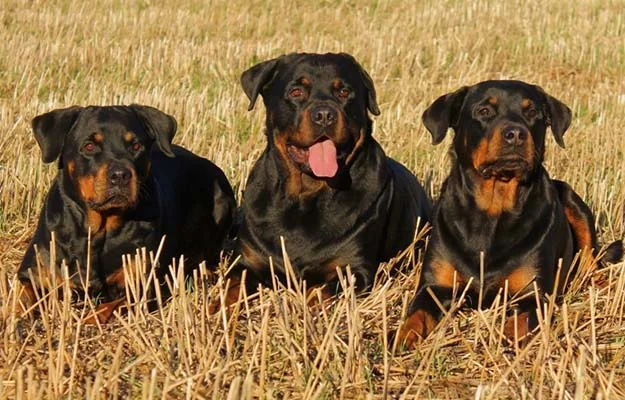

Rottweiler at a Glance
- One of the oldest known dog breeds, descended from Roman drover dogs that herded and guarded livestock across Europe
- Loyal, calm, and confident by nature. Well-bred Rottweilers are self-assured with strangers rather than aggressive or fearful
- Need at least 60 minutes of vigorous exercise daily plus regular mental stimulation to stay balanced and well-mannered
- Require experienced owners who can provide consistent, positive training and thorough early socialisation
- Prone to specific health conditions including hip dysplasia, osteosarcoma, and heart disease. Health testing of breeding stock is essential. Know the early signs of illness — Rottweilers tend to hide pain
- Rottweilers are subject to breed-specific legislation in some regions. Research local laws before committing to the breed
Few dog breeds carry as much baggage as the Rottweiler. Media coverage, insurance exclusions, and breed-specific legislation in various jurisdictions have built a reputation around this breed that does not match what Rottweiler owners, reputable breeders, and animal behaviour researchers actually observe in well-bred, well-raised dogs. The Rottweiler behind the reputation is a dog of remarkable loyalty, genuine intelligence, and deeply affectionate devotion to the people it considers its family.
That said, the Rottweiler is absolutely not a breed for everyone. Their size, strength, working drive, and protective instincts make them a breed that requires experienced, committed owners. Understanding exactly what that means in practice is what this guide is for.
Quick Stats and Ratings
Rottweiler Breed Profile
Breed Characteristic Ratings
History and Origin
The Rottweiler is one of the oldest continuously bred working dog types in recorded history. Their ancestors were Roman drover dogs, large, powerful mastiff-type animals that accompanied Roman legions across Europe, driving and guarding the cattle that supplied the armies with food. As the legions moved through the region that is now southern Germany, some of these dogs remained behind and continued to develop as a regional working type.
The German town of Rottweil became the centre of this developing breed. Local butchers relied on these strong dogs to drive cattle to market and to pull carts loaded with meat. The breed became known locally as the Rottweiler Metzgerhund, meaning the Rottweil butcher's dog. They were so valued for their reliability and strength that they were also used to carry the day's earnings home from the market in purses tied around their necks, a task that required both trustworthiness and a presence imposing enough to deter thieves.
With the advent of rail transport in the 19th century, cattle driving dogs became less commercially necessary, and the Rottweiler nearly vanished as a breed. A revival of interest at the turn of the 20th century saved the breed, and Rottweilers were subsequently used in police and military roles during World War I. The AKC recognised the breed in 1931. Today, Rottweilers consistently rank among the top 10 most popular dog breeds in the United States.
True Temperament: Myths vs Reality
The gap between the Rottweiler's reputation and their actual temperament is notable enough to address directly.
Rottweilers are naturally aggressive and unpredictable.
Rottweilers were bred for calm confidence and reliable working temperament. The AKC breed standard describes the ideal temperament as confident, courageous, and self-assured. A well-bred Rottweiler approaches unfamiliar situations with composure rather than reactivity. Aggression in Rottweilers is almost always traceable to poor breeding, absence of socialisation, abusive treatment, or mismanagement rather than breed-inherent tendency.
Rottweilers turn on their owners without warning.
Dogs do not turn without warning. Every dog communicates escalating discomfort through body language before aggression occurs. The perception of sudden aggression most often reflects an owner who missed or ignored earlier warning signals. Rottweilers trained through punishment-based methods or kept in isolation are at higher risk of behavioural problems, but this is true of virtually all breeds with working drive.
The authentic Rottweiler temperament is best described as loyal, calm, watchful, and deeply devoted to their family. They tend to be reserved rather than immediately friendly with strangers, which reflects their guardian heritage. They are not cold or standoffish with people they know and trust. Many Rottweiler owners describe their dog's affectionate behaviour with family as almost comically at odds with the breed's intimidating appearance.
Rottweilers are also genuinely intelligent dogs. They rank in the upper tier of working and obedience intelligence rankings and are used successfully in search and rescue, therapy work, police and military roles, and competitive obedience. This intelligence requires mental engagement. A Rottweiler with nothing to think about is a Rottweiler looking for something to think about, which is not always what owners have in mind.
Training and Socialisation
Rottweilers are highly trainable and respond strongly to consistent, positive reinforcement-based methods. Their intelligence and desire to work alongside their owners makes formal training rewarding for both dog and handler. However, their size, strength, and working drive mean that untrained Rottweilers can become genuinely difficult to manage, and their guardian instincts without proper guidance can develop into problem behaviour.
Training should begin from the first day home. Basic manners, crate training, leash manners, and name recall are all appropriate starting points even for an 8-week-old puppy. Puppy classes that use positive reinforcement provide socialisation opportunities alongside formal instruction and are strongly recommended.
Rottweilers are often trained with dominance-based or punishment-based methods due to outdated beliefs about large guardian breeds needing a heavy hand. Research consistently shows this approach is less effective and more harmful than positive reinforcement. Rottweilers trained with force can develop defensive aggression and anxiety. The same dog trained with rewards learns faster, remains more reliable, and maintains a trusting relationship with their owner.
Socialisation is arguably the most critical investment you can make in a Rottweiler puppy. Because they are large, powerful, and naturally reserved with strangers, a Rottweiler that is poorly socialised has a much higher potential for problems than a poorly socialised small breed. The socialisation window between 8 and 16 weeks should be used extensively and deliberately to expose the puppy to a wide variety of people including children, men, and people in uniforms or hats, other well-behaved animals, different environments, and sounds, always with positive associations.
Exercise Needs
Adult Rottweilers need at least 60 minutes of moderate to vigorous exercise every day. This is a minimum rather than a target. Rottweilers that are not adequately exercised develop restlessness, may become destructive, and are harder to manage in the home. Exercise does not need to be intense every day, but it needs to be consistent and meaningful.
Walking is fine as a baseline but should not be the only outlet. Rottweilers enjoy structured activities that engage their working heritage: tracking and nose work, draft pulling, Schutzhund and protection sport training, agility, and swimming. Many Rottweilers are natural swimmers and find it an excellent low-impact exercise option, particularly beneficial for dogs with joint conditions.
Rottweiler puppies should not be subjected to forced, repetitive exercise such as extended running or jumping until their growth plates have closed, typically around 18 months of age. Over-exercise during the growth period can cause damage to developing bone and joint structures. A general guideline is 5 minutes of structured exercise per month of age, twice daily, plus free play at their own pace. Ask your veterinarian for specific guidance for your puppy.
Grooming and Coat Care
The Rottweiler's short, dense double coat is relatively low maintenance compared to long-coated breeds, but it does shed. Shedding is year-round at a moderate level with heavier seasonal shedding twice a year as the undercoat blows out in spring and autumn.
Weekly brushing with a firm bristle brush or rubber curry comb during non-shedding periods keeps the coat in good condition and reduces the amount of loose hair around the home. A deshedding tool and more frequent brushing during heavy seasonal shedding periods makes a major difference. Rottweilers do not require professional grooming as regularly as long-coated breeds, but a professional bath and blow-dry during peak shedding can be helpful.
Nails need trimming every 3 to 4 weeks. Given the Rottweiler's size, allowing nails to grow overly long affects their gait and can cause joint stress. Ear cleaning weekly, teeth brushing two to three times a week, and checking the skin folds around the face for moisture buildup are routine care tasks that become much easier when introduced during puppyhood.
Health Conditions
| Condition | Description | What to Do |
|---|---|---|
| Hip and Elbow Dysplasia | Abnormal joint development causing pain and reduced mobility. Very common in large breeds. Reputable breeders screen for both. | Ensure breeding parents have OFA or PennHIP evaluations. Maintain healthy weight. Monitor for early signs of lameness. |
| Osteosarcoma (Bone Cancer) | Rottweilers have a statistically elevated risk of bone cancer compared to most other breeds. Typically affects the limbs. Watch for sudden lameness or swelling. | Know the warning signs. Any sudden unexplained limb lameness in a Rottweiler warrants prompt veterinary attention and X-rays. |
| Dilated Cardiomyopathy (DCM) | Enlargement and weakening of the heart muscle. Can progress silently. Cardiac screening in breeding stock is important. | Regular veterinary cardiac evaluations. Ask your vet about screening frequency based on age and individual risk. |
| Gastric Dilatation-Volvulus (Bloat) | Life-threatening stomach twisting more common in deep-chested large breeds. Requires emergency surgery. | Learn the signs: unproductive retching, distended abdomen, restlessness. If suspected, go to an emergency vet immediately. Discuss preventative gastropexy with your vet. |
| Cruciate Ligament Tears | Knee ligament injuries are more common in Rottweilers than many other breeds. Often presents as sudden hind limb lameness. | Maintain healthy weight to reduce joint stress. Surgical repair is typically required when the cruciate ligament ruptures. |
| Hypothyroidism | Underactive thyroid gland causing weight gain, lethargy, coat changes, and behavioural changes. Manageable with daily medication once diagnosed. | Thyroid function can be checked through routine blood testing. See our full article on dog hypothyroidism symptoms. |
Rottweilers with Families and Other Pets
Rottweilers that are raised with children and socialised appropriately to them can be extraordinarily devoted and gentle family dogs. Many Rottweiler owners describe their dogs as deeply patient and protective with children they have grown up alongside. However, their size alone means that an enthusiastic Rottweiler can easily knock over a small child without any aggressive intent. Supervision of interactions between Rottweilers and young children is always warranted.
Rottweilers can coexist well with other dogs when socialised to them from puppyhood and managed thoughtfully. Some Rottweilers, particularly males, can be dog-selective or dog-dominant, which requires careful management in multi-dog households. Same-sex aggression can occur in dogs of this type. Introducing a Rottweiler to an existing dog of the same sex should be done carefully and gradually.
Cats and other small animals can coexist with Rottweilers that have been raised alongside them, but the combination of prey drive and size means introduction needs to be managed carefully and supervision maintained until a genuinely stable relationship is established.
Is a Rottweiler Right for You?
A Rottweiler suits you well if you have experience with dogs, particularly large or working breeds, you are home a considerable portion of the day, you are genuinely committed to consistent training and ongoing socialisation, you have secure outdoor space, and you have researched the breed's specific legal status in your area and confirmed you can own one without restriction.
A Rottweiler is probably not the right choice if you are a first-time dog owner with no prior experience managing powerful working breeds, you are away from home for 8 or more hours daily, you live in a jurisdiction with breed-specific legislation covering Rottweilers, or you are looking for a dog that is immediately friendly and welcoming to everyone they meet.
Frequently Asked Questions
Are Rottweilers good family dogs?
Rottweilers can be excellent family dogs when properly raised, socialised, and trained. They are known for forming deep, affectionate bonds with their families and can be gentle and patient with children they have grown up with. However, their size, strength, and protective instincts mean they are not suitable for every family. They need experienced owners who can provide consistent training, thorough early socialisation, and calm, firm leadership.
Are Rottweilers aggressive?
Rottweilers are not inherently aggressive. They were bred for calm confidence, steady working temperament, and discriminating protective instinct rather than indiscriminate aggression. A well-bred, well-socialised, and properly trained Rottweiler is typically self-assured and aloof with strangers rather than aggressive or fearful. Problem aggression in Rottweilers is almost always traceable to poor breeding, inadequate socialisation, abusive handling, or the absence of training.
How much exercise does a Rottweiler need?
Adult Rottweilers need at least 60 minutes of moderate to vigorous exercise daily. This can be split across walks, structured play, or activities like pulling, swimming, or tracking. Rottweilers also benefit from mental stimulation through training and nose work. Puppies should not be over-exercised before their growth plates close at around 18 months. A general guideline for puppies is 5 minutes of structured exercise per month of age, twice daily.
What health problems do Rottweilers commonly have?
Common Rottweiler health concerns include hip and elbow dysplasia, osteosarcoma (bone cancer), dilated cardiomyopathy (heart disease), cruciate ligament injuries, and gastric dilatation-volvulus (bloat). Rottweilers have a statistically higher rate of osteosarcoma than most other breeds. Responsible breeders screen for hip and elbow dysplasia using OFA or PennHIP evaluations and for cardiac conditions before breeding.
Do Rottweilers shed a lot?
Rottweilers have a short, dense double coat and shed year-round at a moderate level, with heavier seasonal shedding twice a year as the undercoat blows out. They are not hypoallergenic. Weekly brushing with a firm bristle brush is sufficient during non-shedding periods. A deshedding tool and more frequent brushing during the twice-yearly heavy shed significantly reduces loose hair around the home.
Medical disclaimer: This article is for educational purposes only and does not constitute veterinary advice. Always consult a licensed veterinarian for diagnosis and treatment of your pet's health conditions.